Beef Liver for Iron and Energy: How It Works (and Its Limits)
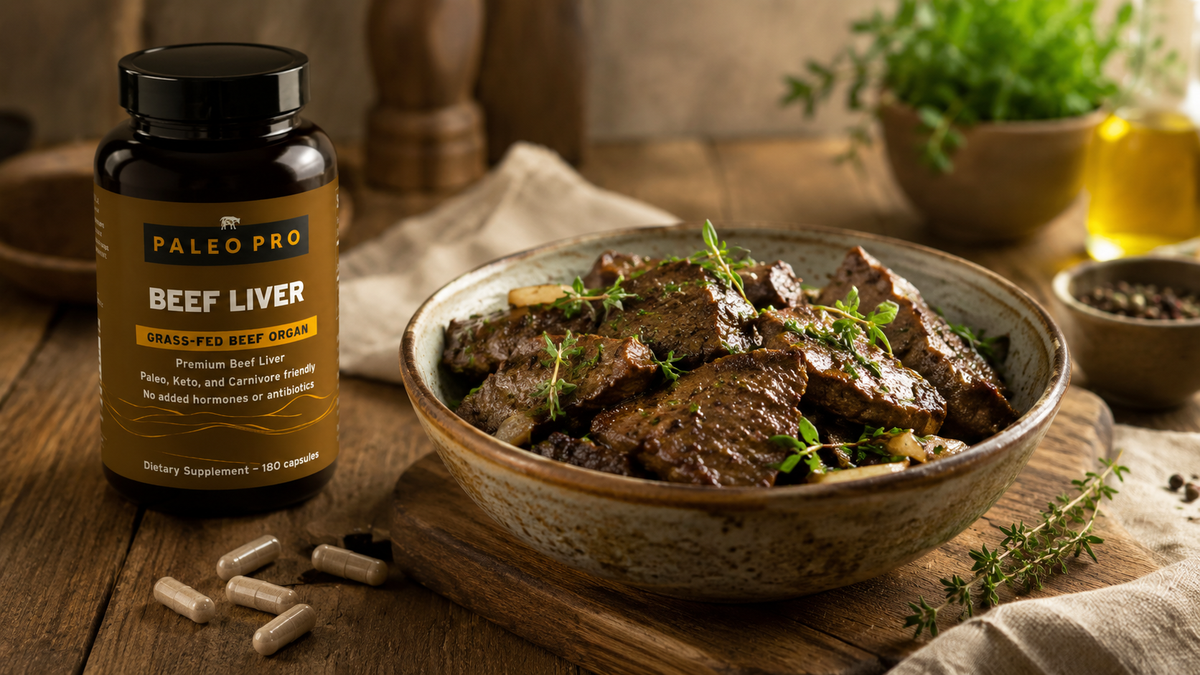
Yes — beef liver is a rich source of heme iron, the highly absorbable form found in animal foods, along with the B12 and copper your body needs to actually use that iron. Because iron carries oxygen and helps produce energy, a liver supplement can support healthy iron levels and everyday energy. It supports iron intake through food; it is not a treatment for diagnosed anemia.
Iron is the nutrient people most associate with liver, and for once the reputation is deserved. But "beef liver has iron" is only half the story — the more useful question is what kind of iron, how well your body absorbs it, and what it actually does for your energy. Here's the honest mechanics, including the line between supporting your iron and treating a medical condition, which are not the same thing.

Grass-fed desiccated liver, 3,000mg a serving — a well-absorbed source of heme iron, B12, and copper, third-party tested.
Does beef liver have iron — and what kind?
Beef liver is a rich source of heme iron — the form found only in animal foods, and the form your body handles best. A 3 oz serving provides a substantial share of the daily requirement [1]. What sets heme iron apart is absorption: your body takes up heme iron at roughly 15–35%, versus as little as 2–20% for the non-heme iron in plants and most iron pills [2]. Heme iron also isn't blocked by the phytates and polyphenols in plant foods that drag down non-heme absorption.
So when people ask "does beef liver have iron," the real answer is: yes, and in the form that actually makes it into your bloodstream. Spleen and kidney add more heme iron in a multi-organ blend, but liver alone is already one of the better iron foods you can eat.

Grass-fed desiccated liver, 3,000mg a serving — a well-absorbed source of heme iron, B12, and copper, third-party tested.
How beef liver's iron supports energy
The iron-energy link is direct. Iron is the core of hemoglobin, the molecule that carries oxygen from your lungs to every cell — and cells need oxygen to produce energy. When iron runs low, oxygen delivery drops, and fatigue is often the first thing people feel.
Liver backs iron up with the two nutrients that make iron usable:
- Copper. Your body needs copper to move iron where it's needed; without enough, iron can get "stuck" and unavailable even when intake is fine. Liver is the richest common food source of both, together [3].
- Vitamin B12. B12 is essential for making healthy red blood cells and for the energy metabolism inside your cells, and liver is the single richest food source of it [4].
That trio — heme iron, copper, and B12 in one whole food — is why liver has a long reputation as an energy food. It's nutritional support: it helps your body do what it already does, provided you were short on those nutrients to begin with.
Can beef liver help with iron-deficiency anemia?
This is where honesty matters most. Iron deficiency is the most common nutritional deficiency in the world, affecting nearly two billion people [5], and low iron is a genuine cause of fatigue. Iron-rich foods like liver support healthy iron intake, and heme iron is well absorbed with fewer of the digestive side effects that iron pills are known for [2].
But a food is not a diagnosis or a treatment. If you have symptoms of anemia — persistent fatigue, shortness of breath, pale skin, a racing heart — that's a reason to see a doctor and get your iron tested, not to self-treat with a supplement. Anemia has several causes, some serious, and the right dose and form of iron for a diagnosed deficiency is a medical decision. Beef liver can be part of an iron-supportive diet; it is not a substitute for proper testing and care. Used that way — as food, alongside medical guidance where needed — it's a sensible source of absorbable iron.
How to get the most iron from beef liver
One of heme iron's quiet advantages is that it's not blocked by the dietary inhibitors that sabotage plant iron. The phytates in grains, the polyphenols in coffee and tea, and the calcium in dairy all drag down absorption of non-heme iron — but they leave heme iron largely alone [2]. That means liver's iron doesn't demand the careful meal-timing an iron pill often does; you don't have to keep it away from your morning coffee.
A few habits still help. Pairing any iron-rich meal with a source of vitamin C supports absorption of whatever non-heme iron is on the plate, and spreading intake across the day is gentler on digestion than a single large dose. But the main reason liver's iron works so well isn't a trick of timing — it's simply that heme iron comes in a whole-food package the body is built to absorb [2].
Beef liver vs iron pills
If you're choosing between liver and a conventional iron supplement, the trade-offs are worth knowing:
- Absorption: liver's heme iron is absorbed more efficiently than the non-heme iron in most iron tablets [2].
- Side effects: iron pills are notorious for constipation and nausea; heme iron sources tend to cause fewer of these [2].
- Whole-food cofactors: liver brings copper, B12, and vitamin A alongside its iron [3][4]; an iron pill is iron alone.
- Dose control: a standardized iron pill delivers a precise, high dose — which is exactly what a diagnosed deficiency sometimes needs. This is the one area where pills, under medical supervision, have the edge.
For everyday iron support in a well-absorbed, food-based form, liver is hard to beat. For correcting a diagnosed deficiency, follow your doctor's guidance on dose.
Frequently asked questions
Does beef liver have iron? Yes — beef liver is a rich source of heme iron, the highly absorbable form found in animal foods, absorbed far better than the non-heme iron in plants and iron pills [1][2]. It also supplies the copper and B12 your body needs to use iron effectively.
Is beef liver good for low energy? It can be, if low iron or B12 was part of the problem. Iron carries oxygen and B12 supports energy metabolism, so restoring them from a food source like liver often steadies energy [4]. It's nutritional support, not a stimulant — there's no instant effect.
Can beef liver cure anemia? No. Liver supports healthy iron intake, but anemia is a medical condition with several possible causes and should be diagnosed and treated by a doctor. Use liver as part of an iron-rich diet, not as a replacement for testing and care [5].
How much iron is in beef liver? A 3 oz serving of beef liver provides a meaningful share of the daily iron requirement as heme iron [1]. Spleen and kidney are even denser heme-iron sources, which is why multi-organ blends are strong iron options too.
Is beef liver's iron better than an iron supplement? For absorption and tolerability, liver's heme iron generally has the edge, with fewer digestive side effects [2]. For a diagnosed deficiency that needs a precise high dose, a doctor-recommended iron supplement may be more appropriate. They can be complementary.
Who benefits most from beef liver's iron? People with higher iron needs or lower intake — including women of reproductive age, athletes, and anyone reducing red meat — often benefit from an absorbable, food-based iron source. Anyone with symptoms of deficiency should get tested first [5].
Beef liver earns its iron reputation: it's one of the best whole-food sources of well-absorbed heme iron, backed by the copper and B12 that make iron work. Just keep the line clear — it's excellent iron nutrition, and medical care is still medical care.
Want an easy, absorbable source of iron, B12, and copper? Grass-fed Beef Liver delivers 3,000mg of desiccated liver per serving, third-party tested — with a 60-day money-back guarantee. For the complete nutrient rundown, see Beef Liver Supplement Benefits.
Sources
- USDA FoodData Central — Beef liver, braised (FDC ID 168626); ~5.2 mg iron per 3 oz. fdc.nal.usda.gov
- Gallo Ruelas, M., et al. (2024). "A comparative analysis of heme vs non-heme iron administration: a systematic review and meta-analysis of randomized controlled trials." European Journal of Nutrition, 64(1), 30. PMID: 39708071
- Linus Pauling Institute (2024). "Copper." Micronutrient Information Center, Oregon State University (copper and iron metabolism; ceruloplasmin). lpi.oregonstate.edu
- Stabler, S.P. (2013). "Vitamin B12 Deficiency." New England Journal of Medicine, 368(2), 149–160. PMID: 23301732
- GBD 2021 Anaemia Collaborators (2023). "Prevalence, years lived with disability, and trends in anaemia burden by severity and cause, 1990–2021." The Lancet Haematology, 10(9), e713–e734. PMID: 37536353
