Grass-Fed vs Regular Beef Liver (and What 'Desiccated' Means)
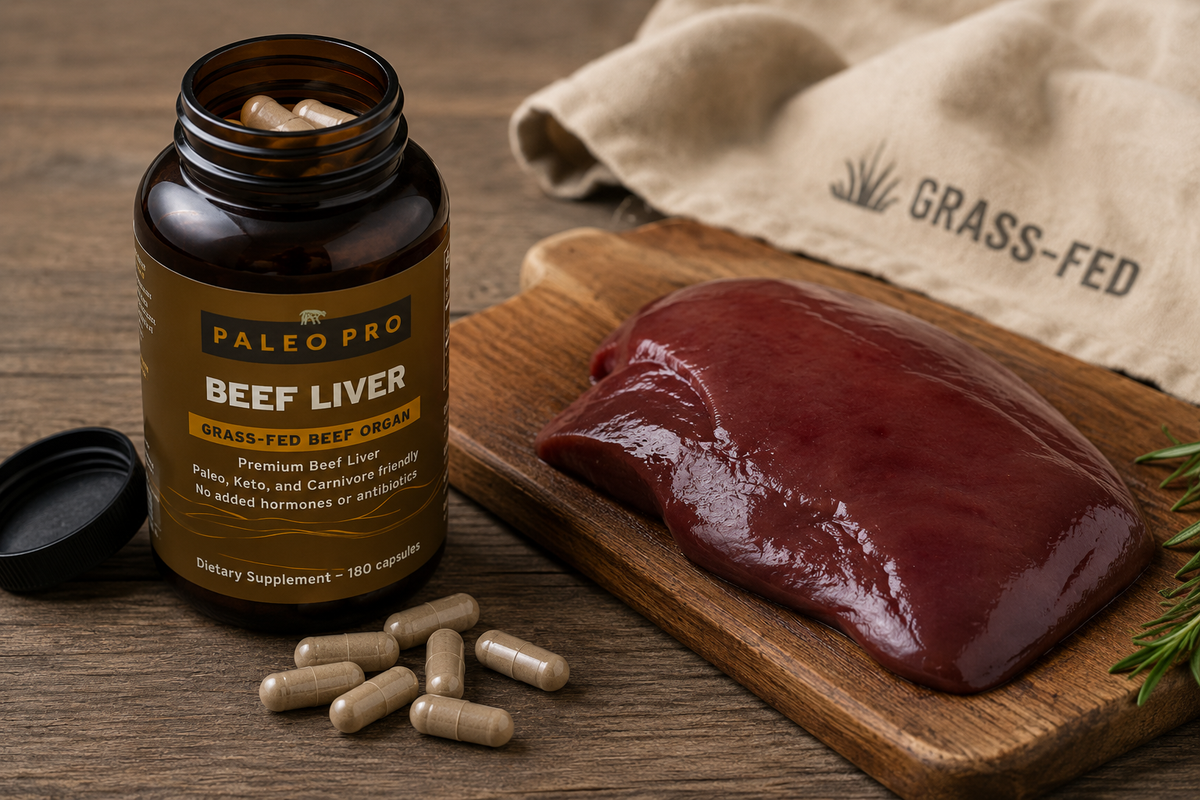
Grass-fed beef liver comes from cattle raised on pasture, and it's the better choice for two reasons: cleaner sourcing means a lower contaminant load, and pasture-raised animals tend to carry a better overall nutrient profile than grain-finished ones. "Desiccated" beef liver is simply fresh liver that's been gently dried into a powder or capsule — the water removed, the nutrients kept.
If you've started shopping for liver — fresh or in capsules — you've run into a wall of labels: grass-fed, grass-finished, pasture-raised, desiccated, freeze-dried, "cow liver." Some of it matters a lot, some of it is marketing. This is the plain-English version: what actually separates a good liver from an ordinary one, what "desiccated" really means, and how to judge a supplement before you buy.

Grass-fed, pasture-raised desiccated liver, gently dried and third-party tested — 3,000mg a serving, sourcing you can actually verify.
Grass-fed vs regular beef liver: does it matter?
Yes — more for liver than for almost any other cut, and here's the honest reason. The liver's job in a living animal is to filter and process everything the animal takes in. It doesn't hoard toxins, but it can carry more of certain contaminants — cadmium and lead in particular — than muscle meat, and those levels track with how and where the animal was raised [1]. Grass-fed, pasture-raised cattle from clean environments carry a lower contaminant load. So with liver, "grass-fed" isn't only a nutrition story — it's a purity story.
There's a nutrient angle too, though it's more modest than marketing suggests. Pasture-raised animals tend to have a somewhat different fat profile and micronutrient balance than grain-finished ones. The differences in a nutrient-dense organ like liver are real but not dramatic; the bigger, more reliable reason to choose grass-fed liver is the cleaner sourcing. Either way, the nutrient headline is the same — liver is an exceptional source of heme iron, B12, and preformed vitamin A regardless of finishing [2].
The practical rule: for liver specifically, pay for genuinely grass-fed, pasture-raised sourcing. It's the one "premium" label that earns its place.

Grass-fed, pasture-raised desiccated liver, gently dried and third-party tested — 3,000mg a serving, sourcing you can actually verify.
What is desiccated beef liver?
Desiccated beef liver is fresh liver that's been gently dried and milled into a powder, then usually encapsulated. "Desiccated" just means dried. Removing the water concentrates the liver — so gram for gram, dried liver is more nutrient-dense than fresh — and it strips out the strong taste and texture that stop most people from eating liver at all.
How the liver is dried is the part that matters for quality:
- Freeze-dried (lyophilized): frozen, then the water is drawn off under vacuum at very low temperature. This preserves heat-sensitive nutrients and protein structure the best [3].
- Heat-desiccated: dried with heat, which is cheaper but can degrade some nutrients if temperatures run high.
Lab work comparing processing methods consistently finds that lower-temperature, gentler drying preserves more of liver's intact protein and nutrients than high-heat methods [3]. So when a supplement is proud of its process — freeze-dried, or low-temperature — that's a genuine quality signal, not just a buzzword.
Cow liver, beef liver, desiccated — what's the difference?
The terminology trips people up, so here it is plainly:
- "Cow liver" and "beef liver" are the same thing — liver from cattle. "Beef liver" is just the culinary term; searches for "cow liver" are asking about the identical food.
- Fresh liver is the raw or cooked organ you'd buy at a butcher.
- Desiccated liver is that same liver, dried into powder or capsules — the convenient, taste-free form.
- A "liver supplement" almost always means desiccated liver in a capsule.
None of these is a different or lesser food — they're the same organ in different formats. The choice between fresh and desiccated comes down to whether you'll actually cook and eat liver (few people will) or would rather take a capsule.
Is grass-fed beef liver worth the extra cost?
For liver, more than for most foods — yes. The premium buys two things that genuinely matter here. First, a lower contaminant load: because the liver processes what the animal takes in, grass-fed, pasture-raised sourcing from clean environments means less accumulated cadmium and lead than conventionally raised liver [1]. Second, sourcing you can verify — grass-fed brands tend to name their country of origin and test their products, which is exactly the transparency the rest of the category lacks [4].
The nutrient bump from grass finishing is real but modest; the purity and the transparency are the bigger payoff. If you're going to eat liver regularly, the grass-fed premium is one of the few in the supplement aisle that clearly earns its price. And if your budget is tight, genuinely grass-fed liver still beats a cheaper, unverified one every time — on liver, sourcing is not the place to cut corners.
How to choose a quality liver supplement
Once you've decided on a supplement, three checks separate a good one from filler:
- Genuinely grass-fed and pasture-raised, ideally with a named country of origin — the sourcing that keeps the contaminant load low [1].
- Gently dried — freeze-dried or low-temperature processing to protect the nutrients [3].
- Third-party tested — because a regulatory analysis found the majority of bovine liver supplements misstate something on their label, independent testing is how you know the product matches the claim [4].
Everything else — flashy packaging, influencer endorsements — is noise. Get those three right and you've got real liver nutrition; miss them and you may be paying for ground-up filler.
Frequently asked questions
Is grass-fed beef liver better than regular? For liver, yes. Because the liver can carry more contaminants like cadmium and lead than muscle meat, and those track with how the animal was raised, grass-fed pasture-raised sourcing means a cleaner product [1]. There's also a modest nutrient-profile benefit. It's the one premium label that reliably earns its cost on liver.
What does desiccated beef liver mean? Desiccated simply means dried. Desiccated beef liver is fresh liver gently dried into a powder and usually put into capsules — the water removed, the nutrients concentrated, and the strong taste gone.
Is desiccated beef liver as good as fresh? It keeps most of liver's nutrient profile and is far more convenient. Fresh liver has a slight edge on bioavailability, but a quality grass-fed, gently dried supplement is a very reasonable way to get the benefits — especially if the alternative is not eating liver at all.
Is freeze-dried or heat-dried liver better? Freeze-dried (or low-temperature) processing preserves more heat-sensitive nutrients and protein structure than high-heat desiccation [3]. If a brand freeze-dries, that's a genuine quality point worth paying attention to.
Is cow liver the same as beef liver? Yes — they're identical. "Cow liver" and "beef liver" both mean liver from cattle; the two terms are used interchangeably.
How do I know if a beef liver supplement is high quality? Check three things: genuinely grass-fed/pasture-raised sourcing, gentle (freeze-dried or low-temp) processing, and third-party testing [1][3][4]. Those predict quality far better than the brand's marketing.
Grass-fed, gently dried, honestly tested — that's the whole quality story for liver, fresh or in a capsule. Get the sourcing and processing right and the format is just a matter of preference.
Looking for liver that clears all three checks? Grass-fed Beef Liver is 3,000mg of desiccated, grass-fed, pasture-raised liver per serving, third-party tested for purity — with a 60-day money-back guarantee. New to liver? Start with is beef liver good for you.
Sources
- European Food Safety Authority (2009–2024). "Metals as contaminants in food" (cadmium and lead higher in liver and kidney than muscle meat). efsa.europa.eu
- Gallo Ruelas, M., et al. (2024). "A comparative analysis of heme vs non-heme iron administration: a systematic review and meta-analysis of randomized controlled trials." European Journal of Nutrition, 64(1), 30. PMID: 39708071
- Kang, S.N., et al. (2017). "Nutritional Quality and Physicochemical Characteristics of Defatted Bovine Liver Treated by Supercritical Carbon Dioxide and Organic Solvent." Korean Journal for Food Science of Animal Resources, 37(1), 29–40. PMID: 28316468
- Silva, C.S., Dahm, M.M., & Hellberg, R.S. (2022). "Bovine Liver Supplement Labeling Practices and Compliance With U.S. Regulations." Journal of Dietary Supplements, 19(1), 4–19. PMID: 33148079
