Ketovore Diet Explained: The Carnivore-Keto Hybrid That's Actually Sustainable
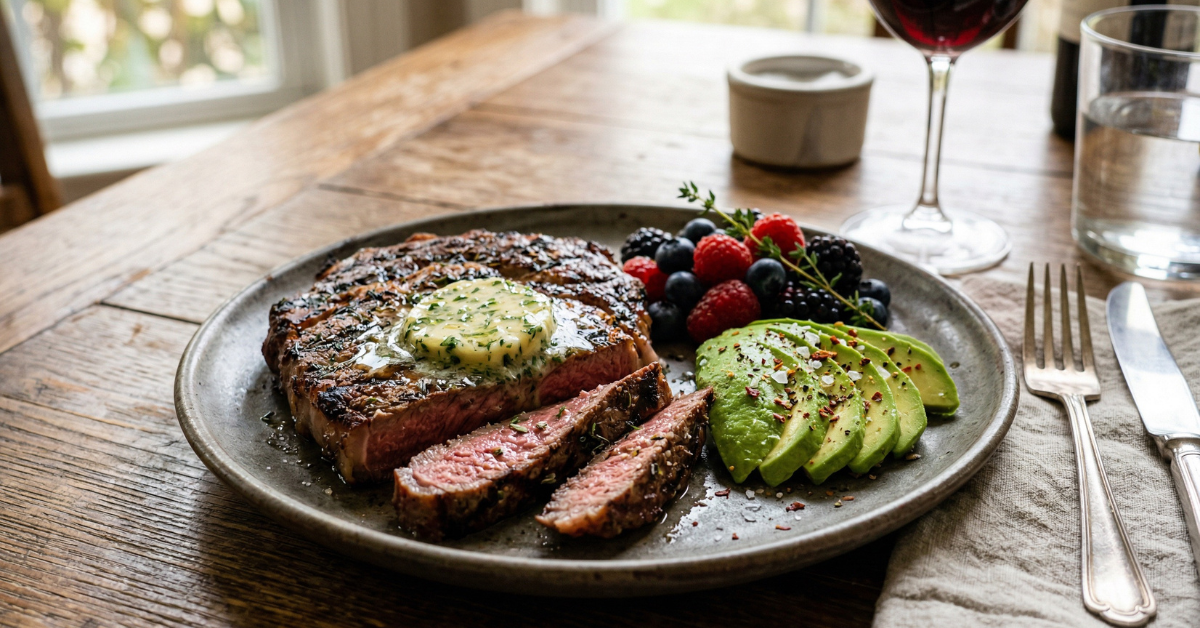
The ketovore diet is a carnivore-keto hybrid — primarily animal foods (meat, fish, eggs, organs, animal fats) with small amounts of select low-carb plants like avocado, berries, and fermented vegetables. Think of it as carnivore with a safety valve. You get most of the elimination benefits of carnivore while addressing the nutrient gaps and social limitations that make strict carnivore hard to sustain. There's no peer-reviewed research on "ketovore" specifically, but the components are well-studied.
The term gained traction through online communities and was influenced by Paul Saladino's shift from strict carnivore to an "animal-based" approach — he added fruit, honey, and raw dairy after experiencing sleep disturbances, muscle cramps, and decreased testosterone on two years of strict carnivore. Ketovore is essentially where many long-term carnivore dieters end up.
What Makes Ketovore Different from Carnivore and Keto
| Strict Carnivore | Ketovore | Standard Keto | |
|---|---|---|---|
| Animal foods | 100% of diet | 80-90% of diet | 50-70% of diet |
| Plant foods | None | Select low-carb only | Wider variety (within carb limit) |
| Daily carbs | ~0g | 10-30g | 20-50g |
| Dairy | Version-dependent | Typically included | Included |
| Seed oils | No | No | Technically allowed (but shouldn't be) |
| Fruit | No | Limited (berries) | Very limited |
| Tracking required | No — just eat animal foods | Minimal — mostly intuitive | Yes — macros and net carbs |
| Nut/seed foods | No | No or minimal | Common (almond flour, nut butter) |
| Processed keto products | No | No | Common (bars, shakes, bread substitutes) |
The key distinction: ketovore is animal-food-first. Keto is carb-limit-first. That difference matters more than it sounds. Standard keto allows highly processed "keto-friendly" foods, seed oils, and inflammatory plant ingredients as long as they fit the macros. Ketovore eliminates those by keeping the carnivore food quality standard and only adding back the least problematic plant foods.

Zero-sugar, 26g grass-fed protein — fits keto and carnivore alike.
The Ketovore Food List
Always Included (The Carnivore Base)
These make up 80-90% of your calories:
- Red meat: Beef (all cuts), lamb, bison, elk, venison
- Poultry: Chicken, turkey, duck
- Pork: Bacon (sugar-free), pork chops, pork belly, ribs
- Fish and seafood: Salmon, sardines, mackerel, shrimp, oysters, cod
- Eggs: Whole eggs, cooked any way
- Organ meats: Liver, heart, kidney, tongue — or a desiccated organ supplement
- Animal fats: Butter, ghee, tallow, lard, duck fat, bone marrow
- Bone broth: Homemade or Bone Broth Collagen powder
- Full-fat dairy: Cheese, cream, yogurt (plain, full-fat)
For the complete carnivore food list with macros per cut, see our carnivore diet food list.
The Ketovore Additions (Select Low-Carb Plants)
These are the plant foods that ketovore allows — chosen for low carb content, high nutrient density, or both:
Fruits (limited):
- Avocado (technically a fruit) — ~2g net carbs per half, rich in potassium and magnesium
- Berries — blueberries, raspberries, blackberries, strawberries in small portions (1/4-1/2 cup)
- Lemon and lime juice for cooking and seasoning
Vegetables (low-carb, low-oxalate):
- Fermented vegetables — sauerkraut, kimchi (small amounts for probiotic benefit)
- Zucchini and summer squash
- Cucumbers
- Leafy greens — spinach, arugula (small amounts; note oxalate content in spinach)
Other:
- Olive oil (extra virgin, for dressing — not for high-heat cooking)
- Coconut oil (for cooking)
- Dark chocolate (85%+ cacao, 1-2 squares occasionally)
- Herbs and spices — all allowed
- Coffee and tea — freely consumed
- Honey — some ketovore practitioners include small amounts; others don't (this is where ketovore and Saladino's "animal-based" overlap)
Still Excluded on Ketovore
- Grains (wheat, rice, oats, corn)
- Legumes (beans, lentils, peanuts, soy)
- Seed oils (canola, soybean, sunflower, safflower)
- Sugar and processed sweeteners
- Starchy vegetables (potatoes, sweet potatoes, corn)
- High-sugar fruits (bananas, grapes, mangoes)
- Processed keto products (bars, bread substitutes, "keto cookies")
- Nuts in large quantities (some ketovore dieters eat small amounts of macadamias; most skip nuts entirely)
Why People Switch to Ketovore
Most ketovore dieters started as strict carnivore and added plants back. The reasons are consistent:
Nutrient Coverage
A 2025 modeling study found that strict carnivore diets without organ meats fell short on vitamin C, thiamin, folate, calcium, and magnesium [1]. Adding avocado (potassium, magnesium), berries (vitamin C, polyphenols), and fermented vegetables (probiotics, vitamin K2) addresses several of these gaps without introducing the problematic plant compounds carnivore aims to eliminate.
Sustainability
Strict carnivore is simple but socially difficult. Ketovore allows enough flexibility to eat at restaurants, share meals with family, and include foods that many people genuinely enjoy — without fundamentally changing the metabolic approach.
Saladino's Experience
Paul Saladino — one of the most prominent carnivore advocates — publicly documented his move away from strict carnivore after experiencing sleep disturbances, muscle cramps, heart palpitations, and decreased testosterone on a two-year strict protocol. His current "animal-based" approach includes fruit, honey, and raw dairy. Whether his experience applies broadly is debatable, but it influenced many people's shift from strict carnivore to something more flexible.
Gut Health
Some carnivore dieters find that small amounts of fermented vegetables and prebiotic fiber improve their gut function. The gut microbiome shifts dramatically on an all-meat diet — bile-tolerant bacteria increase while fiber-fermenting species decrease [2]. Whether this shift is problematic long-term is unknown, but the concern motivates some people to add fermented foods back.
Ketovore vs Keto: Why Not Just Do Keto?
Standard keto's problem isn't the macronutrient ratio — it's the food quality.
A "keto" diet that hits 70% fat, 25% protein, and 5% carbs can include: seed oil-fried cheese chips, soy-based meat alternatives, artificial sweetener-laden desserts, industrial nut butters, and processed "keto bread." All technically keto. None of it food.
Ketovore avoids this by keeping carnivore's food quality standard. The base is whole animal foods. The small plant additions are real, unprocessed foods. No keto frankenfood.
The practical difference: keto requires macro tracking and encourages processed substitutes. Ketovore is intuitive — eat mostly meat and eggs, add a little avocado and some berries, and you're done.
A Day of Eating Ketovore
Breakfast: 3 eggs scrambled in butter, 4 slices sugar-free bacon, 1/2 avocado
Lunch: 1/2 lb ground beef patties with aged cheddar, small side of sauerkraut
Dinner: 8 oz ribeye with compound butter (butter + herbs), small handful of raspberries
Snack (if needed): Sardines from a can, or a Carnivore Complete shake with water
Macros (approximate): ~170g protein, ~140g fat, ~15g net carbs, ~2,000 calories
That's 90%+ animal calories with minimal plant additions. Ketosis maintained. No tracking required beyond common sense.
Who Ketovore Works Best For
Long-term carnivore dieters who want more flexibility without losing the core benefits.
People who tried strict carnivore and struggled with sustainability, social situations, or lingering nutrient concerns.
Former keto dieters who want to upgrade food quality and simplify their approach.
Anyone doing carnivore for weight loss (not elimination). If you're not using carnivore as a diagnostic elimination diet for autoimmune or gut issues, ketovore gives you 90% of the benefits with significantly more flexibility.
Who Should Stay Strict Carnivore
People using carnivore as an elimination diet. If you're trying to identify food sensitivities, autoimmune triggers, or gut irritants, adding plants back defeats the purpose until your elimination phase is complete (typically 30-90 days).
People with active autoimmune flares. The case series evidence for carnivore and IBD involved strict animal-food-only protocols [3]. Adding plants back introduces variables.
People who are thriving on strict carnivore. If it's working, don't fix it.
FAQ
What is the ketovore diet? Ketovore is a carnivore-keto hybrid — primarily animal foods (80-90% of calories) with select low-carb plants like avocado, berries, and fermented vegetables. It maintains carnivore's food quality while addressing nutrient gaps and sustainability concerns. There's no formal definition or peer-reviewed research on "ketovore" specifically.
What's the difference between ketovore and keto? Ketovore is animal-food-first with minimal plant additions. Keto is carb-limit-first and allows any food that fits the macros — including processed "keto" products, seed oils, and artificial ingredients. Ketovore maintains carnivore food quality standards; standard keto doesn't.
What can you eat on the ketovore diet? All animal foods (meat, fish, eggs, organs, dairy, animal fats, bone broth) plus limited low-carb plants: avocado, berries, fermented vegetables, herbs/spices, coffee, and optionally small amounts of olive oil, coconut oil, and dark chocolate. Grains, legumes, seed oils, sugar, and processed foods are still excluded.
Is ketovore better than carnivore? Depends on your goals. Ketovore is more sustainable for most people and addresses some of strict carnivore's nutrient limitations. Strict carnivore is better for elimination protocols targeting autoimmune conditions or gut issues. Neither has long-term clinical trial data comparing outcomes.
Will I still lose weight on ketovore? Yes. Ketovore maintains the protein leverage effect and high satiety that drive carnivore weight loss. The small amount of added carbs (10-30g/day from berries and avocado) won't meaningfully change the metabolic picture. Most ketovore dieters remain in mild ketosis.
Can you drink coffee on the ketovore diet? Yes. Ketovore is less restrictive than strict carnivore about plant-derived beverages. Coffee and tea are generally included. Add cream or butter if desired.
Sources
- Goedeke, S., et al. (2025). "Assessing the Nutrient Composition of a Carnivore Diet: A Case Study Model." Nutrients, 17(1), 140. PMID: 39796574
- David, L.A., et al. (2014). "Diet rapidly and reproducibly alters the human gut microbiome." Nature, 505(7484), 559-563. PMID: 24336217
- Norwitz, N.G. & Soto-Mota, A. (2024). "Case report: Carnivore-ketogenic diet for the treatment of inflammatory bowel disease." Frontiers in Nutrition, 11, 1467475. PMID: 39296504
New to all-meat eating? Start with our Carnivore Diet for Beginners guide. For the full research breakdown, read The Carnivore Diet: Complete Guide. Interested in how carnivore compares to keto head-to-head? That's coming in our Keto vs Carnivore guide. And for nose-to-tail nutrition on any version of the diet, Carnivore Complete provides beef protein plus liver, heart, kidney, and spleen.
