The Carnivore Diet: Complete Guide to All-Meat Eating

The carnivore diet is an all-animal-food eating pattern — meat, fish, eggs, organ meats, and sometimes dairy — with zero plant foods. It's essentially an elimination diet taken to its logical extreme. Proponents report weight loss, reduced inflammation, improved digestion, and mental clarity. Critics point to elevated LDL cholesterol, nutrient gaps, and a total absence of long-term clinical trials. Both sides have legitimate points. Here's what the research actually shows.
One thing upfront: PaleoPro makes Carnivore Complete, a product designed for this diet. We have a financial interest in the carnivore diet's success. That's exactly why we're going to give you the unfiltered version — the benefits, the risks, and the honest gaps in the evidence. If you can't trust the source, the information is worthless.
What Is the Carnivore Diet?
The carnivore diet restricts food intake to animal products exclusively. No vegetables, fruits, grains, legumes, nuts, seeds, or plant-based oils. In its strictest form — sometimes called the "Lion Diet" — it's only ruminant meat (beef, lamb), salt, and water.
The concept isn't new. Arctic Inuit populations ate predominantly animal foods for thousands of years. In 1928, explorer Vilhjalmur Stefansson and colleague Karsten Anderson ate only meat for an entire year under medical observation at New York's Bellevue Hospital. Neither developed scurvy or obvious nutritional deficiencies — though both consumed organ meats regularly.
The modern carnivore movement gained traction around 2018, popularized by orthopedic surgeon Shawn Baker and later by psychiatrist Paul Saladino (who has since moved to a less restrictive "animal-based" approach that includes fruit and honey). Today, communities on Reddit, YouTube, and dedicated forums number in the hundreds of thousands.
Carnivore Diet Tiers
Not all carnivore dieters eat the same way. The spectrum looks like this:
| Tier | What's Included | Strictness | Nutrient Profile |
|---|---|---|---|
| Lion Diet | Beef, salt, water only | Most strict | Highest deficiency risk without organs |
| Strict Carnivore | All ruminant meat + organs | Strict | Good with nose-to-tail |
| Standard Carnivore | All meat, fish, eggs, dairy if tolerated | Moderate | Broadest nutrient coverage |
| Ketovore | Animal-based + select low-carb plants (avocado, berries) | Least strict | Addresses most nutrient concerns |
Most people who say they're "carnivore" fall somewhere in the standard range — eating beef, pork, chicken, fish, eggs, and sometimes cheese or butter.
What Can You Eat on the Carnivore Diet?
The food list is short. That's the point.
Always included:
- Beef (all cuts — steaks, ground, roasts, ribs)
- Lamb and bison
- Pork (chops, belly, bacon, sausage)
- Poultry (chicken, turkey, duck)
- Fish and seafood (salmon, sardines, shrimp, oysters)
- Eggs
- Organ meats (liver, heart, kidney, tongue)
- Bone broth and bone marrow
- Animal fats (tallow, lard, butter, ghee)
Debated (depends on your version):
- Dairy (cheese, cream, yogurt) — included in standard, excluded in strict
- Coffee and tea — technically plants, but many carnivore dieters include them
- Spices and seasonings — salt is universal; others vary by strictness
- Honey — included in some "animal-based" versions (Paul Saladino's approach)
Always excluded:
- All vegetables, fruits, grains, and legumes
- Nuts and seeds
- Plant-based oils (olive oil, coconut oil, seed oils)
- Sugar and artificial sweeteners
- Processed foods
For a detailed breakdown with specific food rules, see our carnivore diet food list. For the gray-area rules — cheese, coffee, honey, spices — see what you can eat on carnivore.
Carnivore Diet Benefits: What the Research Shows
Let's separate what has genuine research support from what's anecdotal. The most honest thing we can tell you: the evidence base is thin. No randomized controlled trials (RCTs) have studied the carnivore diet specifically. What we have is one large survey, several small observational studies, case series, and a growing body of related research on low-carbohydrate and ketogenic diets.
Weight Loss
The Harvard-affiliated survey of 2,029 carnivore diet followers found a median BMI reduction from 27.2 to 24.3 — a shift from overweight to normal weight. That's significant, though self-reported.
Why it works isn't mysterious. Three well-documented mechanisms converge:
-
Protein leverage. Humans prioritize protein intake over other macronutrients. When protein makes up 40-60% of calories (as on carnivore), you hit your protein target faster and eat less total food. This is the protein leverage hypothesis, validated by Simpson and Raubenheimer at the University of Sydney.
-
Reduced food variety. When your options are meat, eggs, and butter, sensory-specific satiety kicks in faster. You get full. You stop eating. Research consistently shows that greater dietary variety drives greater calorie intake.
-
Appetite suppression. Whether from ketosis (β-hydroxybutyrate directly suppresses hunger hormones) or from protein's thermic effect (~30% of protein calories are burned during digestion vs ~3% for fat), most carnivore dieters report eating less without counting calories.
Inflammation and Autoimmune Conditions
This is where the anecdotal reports are most dramatic — and where the controlled evidence is most sparse.
A 2024 case series from Harvard Medical School and INCMNSZ Mexico documented 10 IBD patients (6 ulcerative colitis, 4 Crohn's disease) who achieved clinical remission on carnivore-ketogenic diets. All 10 discontinued IBD medications. Calprotectin levels (a marker of intestinal inflammation) dropped dramatically — one patient went from 4,291 to 9 μg/g. Some maintained remission for 6-11 years.
The proposed mechanisms: β-hydroxybutyrate reprograms macrophages toward an anti-inflammatory phenotype, eliminating plant antigens reduces immune triggering, and removing processed food additives (emulsifiers in particular) may reduce intestinal permeability.
The caveat: 10 patients, no control group, selection bias toward responders. Compelling? Yes. Definitive? Not yet.
For more on inflammation and protein, see our guide to protein powder and inflammation.
Improved Digestion
In the Lennerz 2021 survey, gastrointestinal symptoms were among the conditions most commonly reported as improved. This makes mechanistic sense — by eliminating FODMAPs, fiber, lectins, oxalates, and all other plant compounds simultaneously, you've performed the most aggressive elimination diet possible. If a food sensitivity was driving your symptoms, you've removed it.
The question that remains: which eliminated food was the problem? Carnivore can't answer that. It's a sledgehammer approach to a problem that might only need a scalpel. That's not necessarily bad — sometimes the sledgehammer works. But it makes reintroduction and long-term sustainability more complex.
Mental Clarity and Energy
Widely reported, poorly studied. The shift to fat-based metabolism may improve sustained energy (no blood sugar crashes), and ketones can cross the blood-brain barrier as alternative fuel. Psychiatrist Georgia Ede has written extensively about animal-based diets for mental health. But we don't have controlled trials comparing carnivore to other diets for cognitive outcomes.
Diabetes and Metabolic Markers
In the Lennerz survey, participants with diabetes reported HbA1c reductions of 0.4% and 84-100% reduction in medication use. Triglycerides and HDL cholesterol were optimal (both 68 mg/dL). These are meaningful improvements — but self-reported, without clinical verification.
A smaller German study of 24 participants found that pre-diabetic individuals showed reduced HbA1c, and those with elevated triglycerides (>130 mg/dL) saw reductions.
Carnivore Diet Risks and Side Effects
Cholesterol Elevation
This is the elephant in the room. LDL cholesterol goes up on carnivore. Sometimes dramatically.
The German study found median LDL increased from 157 to 256 mg/dL. The Lennerz survey reported average LDL of 172 mg/dL. Some individuals in the IBD case series showed LDL levels of 268-521 mg/dL.
The nuanced picture:
- A meta-analysis of 38 RCTs found that low-carb diets increase LDL particle size and decrease total LDL particle number. Small, dense LDL particles are the ones most associated with cardiovascular disease. Large, buoyant particles may carry less risk.
- The "Lean Mass Hyper-Responder" (LMHR) phenotype — lean individuals on low-carb diets who develop very high LDL-C with very high HDL-C and very low triglycerides — is being actively studied. Preliminary imaging data from the KETO trial suggests this pattern may not carry the same cardiovascular risk as standard elevated LDL.
- A separate meta-analysis of 36 RCTs found no significant difference between red meat and all comparison diets combined for LDL, HDL, or total cholesterol changes.
Our honest position: The LDL question isn't settled. If your LDL rises significantly on carnivore, don't dismiss it. Get advanced lipid testing (particle number and size, not just concentration). Work with a doctor who understands both metabolic and cardiovascular risk. The worst approach is ignoring it because an internet personality told you cholesterol doesn't matter.
For a deep dive, see our carnivore diet and cholesterol guide.
Nutrient Deficiencies
A 2025 dietary modeling study analyzed four versions of the carnivore diet against national nutrient reference values. The findings:
| Nutrient | Status on Muscle-Meat-Only | Status with Organs |
|---|---|---|
| Vitamin C | Deficient | Marginal (organs contain some) |
| Calcium | Deficient | Still low without dairy |
| Magnesium | Deficient | Deficient (requires supplementation) |
| Thiamin (B1) | Deficient | Improved with pork and organs |
| Folate | Deficient | Adequate with liver |
| Fiber | Zero | Zero |
| Vitamin A | Minimal | Exceeds requirements (liver) |
| B12 | Exceeds | Greatly exceeds |
The pattern is clear: muscle-meat-only carnivore has significant nutrient gaps. Adding organ meats closes most of them. This is why "nose-to-tail" isn't just a philosophy — it's a nutritional requirement if you're eating only animal foods.
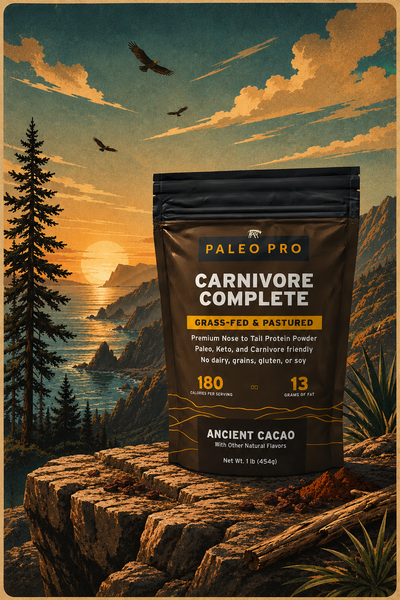
If you're not eating organs regularly, a supplement like PaleoPro Carnivore Complete or Beef Organs fills the gaps that steaks can't.
Adaptation Side Effects ("Carnivore Flu")
The first 2-4 weeks can be rough. Expect:
- Week 1: Headaches, fatigue, brain fog (glycogen depletion + electrolyte shifts)
- Week 1-2: Muscle cramps, digestive changes, irritability, insomnia
- Week 2-3: Symptoms typically resolve as fat oxidation enzymes upregulate
- Week 3-6: Most people report stabilized energy and appetite
The fix for 90% of adaptation symptoms: more salt (5-7g sodium/day), magnesium supplementation (200-400mg), and patience.
For the full troubleshooting guide, see carnivore flu: symptoms and fixes.
Other Concerns
- Kidney stones: One case study documented unfavorable 24-hour urine shifts; symptoms resolved after stopping the diet
- Social challenges: Eating only meat in social situations is genuinely difficult
- Long-term unknowns: No studies longer than 2 years with clinical endpoints exist. The 2026 scoping review of all available human evidence concluded that "long-term adherence cannot be recommended" based on current data
- Cost: Quality grass-fed meat is expensive. A well-formulated carnivore diet can easily run $15-25/day in food costs
How to Start the Carnivore Diet
If you're going to try this, do it properly. A badly executed carnivore diet is worse than a mediocre standard diet.
Step 1: Transition Gradually (1-2 Weeks)
Don't go from a standard American diet to meat-only overnight. Start by eliminating processed foods, then grains, then vegetables over 7-14 days. This reduces adaptation severity.
Step 2: Front-Load Electrolytes
Start increasing salt intake before you go fully carnivore. Add bone broth to your daily routine. Start magnesium supplementation. The biggest reason people quit in week one is preventable electrolyte deficiency.
Step 3: Eat Nose-to-Tail
Include organ meats from the start — or supplement them. Eating only steaks and ground beef for 30 days then claiming "carnivore didn't work" is like judging a car by driving it without oil. The diet requires nutritional completeness, and organs are how you get there.
Step 4: Eat Enough Fat
A common beginner mistake is eating lean meat only. Without carbohydrates, fat is your primary energy source. If you eat only chicken breast and lean ground beef, you'll be exhausted, hungry, and miserable. Choose fatty cuts: ribeyes, 80/20 ground beef, pork belly, salmon, eggs. You should feel satisfied after meals, not restricted.
Step 5: Track How You Feel (and Your Labs)
Get baseline bloodwork before starting: lipid panel, fasting glucose, HbA1c, CBC, metabolic panel. Retest at 30 and 90 days. This gives you data instead of anecdotes.
For a week-by-week walkthrough, see 30-day carnivore diet: what to expect.
Carnivore Diet Supplements: What You Actually Need
We've already written a complete carnivore supplement guide, but here's the short version:
Essential (start day 1):
- Salt: 5-7g sodium/day
- Magnesium glycinate: 200-400mg/day
- Organ meats or organ supplements (vitamin A, folate, copper, choline)
Recommended:
- Bone broth collagen: glycine for gut lining, sleep, and collagen amino acid balance
- Vitamin D3: 2,000-5,000 IU unless you get regular sun
- Omega-3 (if not eating fatty fish): 1-3g EPA+DHA
Optional:
- Potassium (only if persistent cramps despite Na/Mg)
- Vitamin C: 250-500mg as insurance if not eating organs
- Beef testicle: ancestral supplement (honest note: evidence for specific benefits is very limited — see our review)
7-Day Carnivore Diet Meal Plan
Here's what a practical week looks like. This isn't aspirational — it's what people actually eat.
| Day | Breakfast | Lunch | Dinner | Notes |
|---|---|---|---|---|
| Mon | 4 eggs scrambled in butter, 4 strips bacon | Bunless burger patties (80/20) with cheese | Ribeye steak, bone broth | Start with fatty cuts |
| Tue | Carnivore Complete shake | Salmon fillet with butter | Lamb chops, 3 eggs | Fish 2-3x/week for omega-3 |
| Wed | Steak and eggs | Pulled pork, pork rinds | Beef liver (3oz) pan-fried, ground beef | Organ meat day |
| Thu | 4 eggs, 4 sausage links | Rotisserie chicken thighs | NY strip, bone marrow | Bone marrow is a treat |
| Fri | Carnivore Complete shake, 3 eggs | Shrimp and butter, beef jerky | Brisket | Vary your animal proteins |
| Sat | Pork belly, eggs | Beef heart stew (slow cooker) | Ribeye, oysters (6) | Oysters for zinc |
| Sun | Steak and eggs | Ground beef bowl with cheese | Roast chicken, bone broth | Batch cook for the week |
For detailed meal plans and recipes, see our carnivore diet food list and carnivore diet recipes.
Carnivore Diet vs. Keto vs. Paleo
People confuse these constantly. Here's the actual difference:
| Feature | Carnivore | Keto | Paleo |
|---|---|---|---|
| Carbs | Near zero (animal sources only) | Very low (<20-50g/day) | Moderate (from whole foods) |
| Plants | None | Low-carb vegetables, nuts, seeds | Vegetables, fruits, nuts, seeds |
| Dairy | Varies by version | Full-fat dairy usually included | Excluded (strict) or limited |
| Grains/legumes | No | No | No |
| Processed foods | No | Varies (keto-labeled products exist) | No |
| Focus | Animal foods only | Macronutrient ratios (high fat) | Food quality and ancestral eating |
| Ketosis | Sometimes (protein may be too high) | Primary goal | Not a goal |
| Typical protein | 30-50% of calories | 15-25% of calories | 20-35% of calories |
The biggest misconception: carnivore is NOT automatically ketogenic. High protein intake drives gluconeogenesis, which can keep you out of ketosis. If ketosis is your goal, you need to prioritize fat over protein — which means fatty cuts, butter, and tallow, not lean chicken breast.
For a deeper comparison, see keto vs. carnivore: which is right for you?
Who Should (and Shouldn't) Try the Carnivore Diet
Potentially good candidates:
- People with stubborn digestive issues who've failed other elimination diets
- Those with autoimmune conditions looking for dietary intervention (with medical supervision)
- People struggling with food addiction or overconsumption of processed foods
- Athletes and lifters who want simplified nutrition
- Anyone curious about a 30-day self-experiment with pre/post bloodwork
Probably not a good fit:
- Anyone with a history of eating disorders (the extreme restriction can trigger disordered patterns)
- Pregnant or breastfeeding women (nutrient adequacy is harder to guarantee)
- People with kidney disease (high protein load requires healthy kidneys)
- Children and adolescents (insufficient evidence for growing bodies)
- Anyone unwilling to eat organs or supplement them
Frequently Asked Questions
Is the carnivore diet safe? Short-term (30-90 days), the carnivore diet appears safe for healthy adults based on survey data and clinical observations. Long-term safety is unknown — no controlled studies exist beyond 2 years. The main risks are LDL cholesterol elevation and micronutrient deficiency, both of which are manageable with monitoring and organ meat consumption.
Can you eat cheese on the carnivore diet? On standard carnivore, yes — cheese, butter, cream, and other dairy products are animal-sourced and commonly included. On strict carnivore or the Lion Diet, dairy is excluded. If you tolerate dairy without digestive or inflammatory symptoms, there's no carnivore-specific reason to avoid it.
How much weight can you lose on the carnivore diet? The Lennerz survey found a median BMI reduction of 2.9 points (roughly 20-25 lbs for an average-height person). Individual results vary widely depending on starting weight, activity level, and caloric intake. Most weight loss occurs in the first 1-3 months.
Do you need supplements on the carnivore diet? If you eat organ meats regularly, your supplement needs are minimal — primarily electrolytes (salt, magnesium) during adaptation. If you eat only muscle meat, you'll need to address vitamin A, folate, and potentially vitamin C through supplementation. See our carnivore supplements guide.
What about fiber? Don't you need it? A 2014 Nature study found that the gut microbiome adapts rapidly to an all-animal diet, shifting toward bile-tolerant organisms within days. A 2024 case study of a healthy carnivore dieter found no significant differences in microbial diversity compared to controls. The gut ferments protein and bile acids, not only fiber. That said, long-term data is essentially nonexistent, so "fiber isn't necessary" remains an assertion, not a proven fact.
Is the carnivore diet anti-inflammatory? The IBD case series and survey data suggest reduced inflammatory markers (CRP, calprotectin) in some individuals. The mechanism likely involves elimination of processed foods and potential food sensitivities rather than something inherently anti-inflammatory about meat itself. For more, see carnivore diet for inflammation and autoimmune conditions.
Can women do the carnivore diet? Yes, but women may need to pay extra attention to calcium (especially without dairy), iron status, and overall caloric adequacy. Some women report improved menstrual regularity; others experience temporary disruption, especially during rapid weight loss. See our carnivore diet for women guide.
How is carnivore different from keto? Keto focuses on macronutrient ratios (high fat, very low carb) and can include plant foods. Carnivore focuses on food source (animals only) regardless of macros. Carnivore is often too high in protein to maintain deep ketosis. See our keto vs. carnivore comparison.
The Bottom Line
The carnivore diet is the simplest elimination diet in existence: eat animals, don't eat plants. It has genuine potential for weight loss, digestive relief, and possibly inflammatory conditions — but the evidence base is still early-stage. No RCTs. No long-term safety data. Legitimate concerns about LDL cholesterol and nutrient adequacy that require monitoring and management.
If you try it, do it right: eat nose-to-tail, supplement electrolytes, get bloodwork, and don't treat it as a religion. A diet that helps you isn't automatically the best diet for everyone. And a diet that worked at month three might need adjustments at month twelve.
The single most important decision for any carnivore dieter isn't whether to eat beef or chicken. It's whether to include organ meats. The nutrient gap between muscle-meat-only and nose-to-tail is enormous — and it's the difference between a nutritionally incomplete experiment and a well-formulated dietary approach.
PaleoPro's Carnivore Complete was built for exactly this: grass-fed protein combined with beef organ nutrients and healthy fats in one scoop. Because nose-to-tail nutrition shouldn't require a trip to the butcher every week. Browse the full lineup →
Sources
-
Lennerz, B.S., et al. (2021). "Behavioral Characteristics and Self-Reported Health Status among 2029 Adults Consuming a 'Carnivore Diet'." Current Developments in Nutrition, 5(12), nzab133. PMID: 34934897
-
Lietz, A., Dapprich, J. & Fischer, T. (2026). "Carnivore Diet: A Scoping Review of the Current Evidence, Potential Benefits and Risks." Nutrients, 18(2), 348. PMID: 41599961
-
Norwitz, N.G. & Soto-Mota, A. (2024). "Case report: Carnivore-ketogenic diet for the treatment of inflammatory bowel disease: a case series of 10 patients." Frontiers in Nutrition, 11, 1467475. PMID: 39296504
-
Goedeke, S., et al. (2025). "Assessing the Nutrient Composition of a Carnivore Diet: A Case Study Model." Nutrients, 17(1), 140. PMID: 39796574
-
Klement, R.J. & Matzat, J.S. (2025). "Subjective Experiences and Blood Parameter Changes in Individuals From Germany Following a Self-Conceived 'Carnivore Diet'." Cureus, 17(4), e82521. PMID: 40385902
-
Simpson, S.J. & Raubenheimer, D. (2005). "Obesity: the protein leverage hypothesis." Obesity Reviews, 6(2), 133-142. PMID: 15836464
-
Falkenhain, K., et al. (2021). "Effect of carbohydrate-restricted dietary interventions on LDL particle size and number." American Journal of Clinical Nutrition, 114(4), 1455-1466. PMID: 34159352
-
Guasch-Ferré, M., et al. (2019). "Meta-Analysis of RCTs of Red Meat Consumption on Cardiovascular Risk Factors." Circulation, 139(15), 1828-1845. PMID: 30958719
-
David, L.A., et al. (2014). "Diet rapidly and reproducibly alters the human gut microbiome." Nature, 505(7484), 559-563. PMID: 24336217
-
McClellan, W.S. & Du Bois, E.F. (1930). "Clinical calorimetry XLV. Prolonged meat diets." Journal of Biological Chemistry, 87, 651-668.
-
Gibson, A.A., et al. (2015). "Do ketogenic diets really suppress appetite?" Obesity Reviews, 16(1), 64-76. PMID: 25402637