Protein Powder vs. Meal Replacement: What Changes?
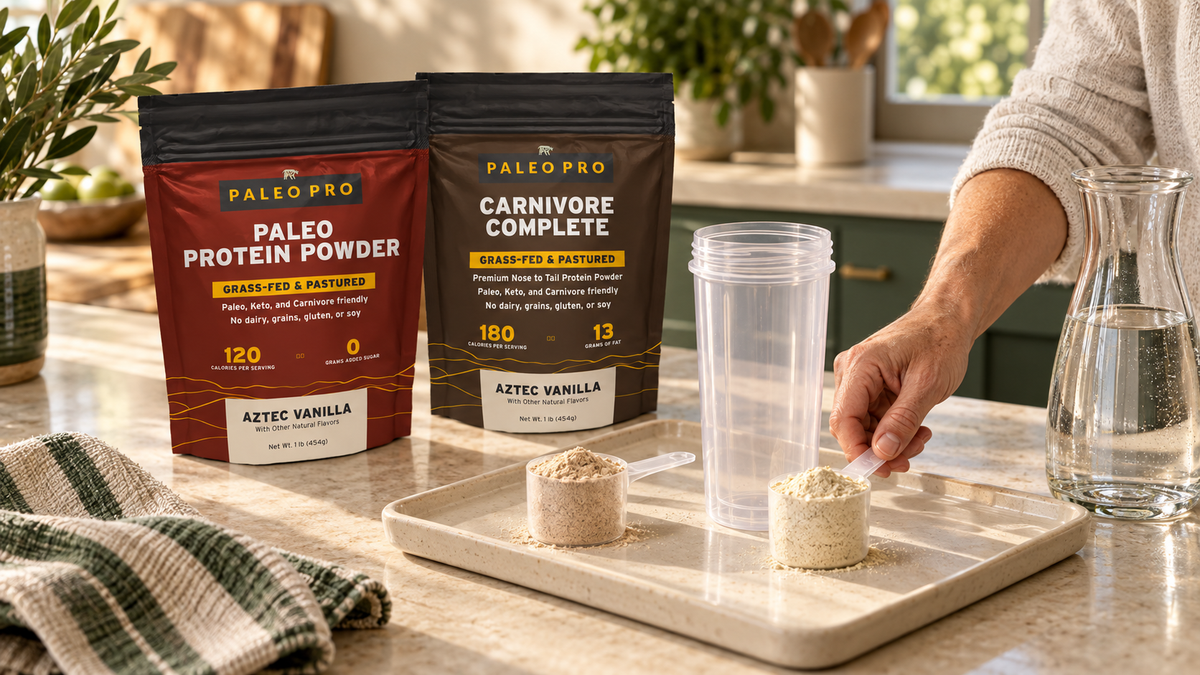
Protein powder primarily adds protein to your diet. A meal replacement is intended to stand in for an eating occasion, so the finished drink's calories and broader nutrient content matter. Adding protein or fat changes a shake's nutrition, but doesn't automatically make it nutritionally complete. Read the formula and directions before choosing.
The confusion is understandable. Both products can come in a bag, taste like vanilla and end up in the same shaker. You have to turn the package over to see what you're getting.
The useful question is what you need the drink to do. Are you adding protein alongside food, or expecting it to carry you through an eating occasion? That decision changes what you should look for on the label.
What is the difference between protein powder and a meal replacement?
The main difference is the intended use and the full nutrient profile. A protein powder concentrates on adding protein. Products sold as meal replacements vary, but their suitability needs to be judged by more than protein grams.
A large protein number doesn't tell you whether the drink contains enough energy for you, meaningful amounts of vitamins and minerals, or any fiber. It also doesn't tell you whether the manufacturer intends the product to replace food. Check the directions alongside the nutrition panel.[1]
| What to compare | Protein powder | Product intended as a meal replacement |
|---|---|---|
| Main job | Add protein alongside your usual food | Provide a convenient alternative for an eating occasion |
| Calories | Vary; protein-focused formulas may be relatively low in energy | Must be assessed against the meal and person's needs |
| Fat and carbohydrate | Often secondary to the protein content | Part of evaluating the finished drink's overall nutrition |
| Fiber | May contain little or none | Check the label; the category name alone doesn't establish an amount |
| Vitamins and minerals | Depend on the ingredients and any fortification | Look for disclosed amounts and the manufacturer's intended use |
| Mixing directions | Water or another beverage changes the finished nutrition | Some products require a specific liquid or added ingredients |
| Complete nutrition | Cannot be inferred from protein content | Must be substantiated for the specific formula and use |
A nutrition comparison is useful only when the servings are comparable. One product may show values for powder alone, while another shows a prepared serving with milk. Read the small print before treating those numbers as equivalent.
Can you use protein powder as a meal replacement?
You can use protein powder in a shake that you drink in place of a meal, but that choice doesn't change what is in the powder. Its calories and nutrient content still need to fit the job, and you should follow the manufacturer's directions.
For example, a protein-focused serving mixed with water can deliver substantial protein with relatively few calories. That may be useful alongside breakfast. If you remove breakfast and keep only the shake, you have also removed whatever energy and other nutrients the food supplied.
Adding ingredients changes the calculation. Milk contributes its own nutrients. A fat source adds calories. Fruit or other foods contribute different nutrients, depending on what you use. Each addition needs to be counted; there is no universal recipe that suits every diet or every person's needs.
A practical way to decide is to write down the actual eating occasion. “I need extra protein with lunch” points toward a protein supplement. “I need something drinkable when I can't prepare lunch” calls for a broader look at energy and nutrients. “I need medical nutrition because I can't eat enough” deserves a clinician or dietitian's guidance.
How do you compare the nutrition of a prepared shake?
Start with the labeled serving weight, then total every ingredient in the amount you use. The FDA's label guidance explains that nutrition values apply to the stated serving, and a serving size is not a recommendation for how much you personally should eat.[1]
Use this process:
- Measure the powder. Use the weight listed for the serving. A heaped scoop may not match it.
- Count the mixing liquid. Water leaves the powder's calories unchanged. Other drinks contribute their own values.
- Add anything else. Include a second powder, cream, oil, fruit or other ingredients in their actual amounts.
- Compare the whole drink with your needs. Review calories alongside protein, fat, carbohydrate and the other nutrients that matter to you.
Keep the basis consistent when comparing costs too. A lower-priced bag may contain fewer servings, and a higher-protein serving may use more powder. “Price per scoop” is only useful when you know what the scoop contains.
Our protein label checklist provides a repeatable way to inspect a product. For dairy avoidance, the dairy-free protein powder guide explains the ingredient distinctions.
What changes when you combine two powders?
You add their labeled nutrition values together. The resulting shake may be a more substantial option, but combining products doesn't prove that the mixture covers every nutritional need.
Here is a specific example using 30g Aztec Vanilla Paleo Protein plus 30g Aztec Vanilla Carnivore Complete, mixed with water. The label images were checked on 2026-09-18.[2,3]
| Labeled value | First 30g serving | Second 30g serving | Combined drink with water |
|---|---|---|---|
| Calories | 120 | 180 | 300 |
| Protein | 26g | 13g | 39g |
| Total fat | 1g | 13g | 14g |
| Total carbohydrate | 1g | 2g | 3g |
| Dietary fiber | 0g | 0g | 0g |
| Saturated fat | 0g | 7g | 7g |
The first serving supplies most of the protein. The second adds beef tallow, bone broth powder and a five-organ blend, along with egg white protein. That's the reason for pairing them.
The same table also shows the limits of the calculation. Fiber remains at 0g. The protein and calorie totals don't establish complete vitamin and mineral coverage. Both packages describe the products as food supplements and say not to use them for weight reduction.[2,3]
Our keto and carnivore meal replacement stack guide gives the exact preparation and ingredient details. The term meal replacement there describes an eating occasion, rather than a nutritionally complete formula or weight-loss program.
Does complete protein mean complete nutrition?
Complete protein and complete nutrition describe different things. Complete protein concerns essential amino acids. The body needs nine essential amino acids from food; eggs are among the foods that provide a complete protein source.[4]
Complete nutrition is a broader claim. It involves energy and other essential nutrients, including fats, vitamins and minerals. You can't establish it by checking only the protein line on a label.
This distinction matters when a drink contains collagen. Collagen contributes to protein totals but has a different amino acid profile. If a blend contains several protein sources, don't assume the entire listed protein amount comes from one ingredient unless the manufacturer provides that breakdown.
Likewise, an organ ingredient list is not a quantified micronutrient panel. It tells you which ingredients are present. To claim an amount of a particular vitamin or mineral, you need a substantiated value for the actual product and serving.
What should keto and carnivore customers check?
For keto, review the total carbohydrate in the entire prepared drink and how it fits the rest of your diet. Adding a low-carb powder to a sweetened beverage can change the result substantially. “Keto” on a package doesn't do the arithmetic for you.
For carnivore, inspect every ingredient. The protein may come from animals while a sweetener, emulsifier or flavor ingredient comes from plants. A flexible animal-based approach and a strict animal-food-only approach can therefore lead to different product choices.
For dairy avoidance, look specifically for dairy-derived ingredients. Egg white protein isn't dairy, but it is an egg allergen. A dairy-free ingredient list also doesn't establish that a product was made in a dairy-free facility; read any allergen and facility statement on the bag.
You should also check whether the shake contains ingredients you simply don't want or tolerate well. A long list and a short list can each contain something that rules a product out for you. Ingredient count doesn't replace reading the ingredients.
How much of your food should come from shakes?
There isn't a single appropriate number for everyone. Your needs, the products you choose and the rest of your food determine whether a shake is useful.
An occasional convenience drink and a plan to replace most meals are different decisions. The second deserves closer attention to energy and nutrient adequacy, particularly when the chosen products are labeled as supplements. A powder formulated to add protein should not be assumed to work as a sole source of nutrition.
Consider the practical side as well. Does the portion fit your appetite? Can you prepare it consistently? Does it leave room for the foods you enjoy and need? The drink needs to work in your actual routine.
If you have a medical condition that changes your protein or fluid needs, difficulty swallowing, or unintended weight loss, ask your care team about the appropriate formula and portion. Those situations need more information than a general comparison article can provide.
Frequently asked questions
Is protein powder the same as a meal replacement?
No. Protein powder primarily adds protein. A meal replacement is intended for use in place of an eating occasion, so calories and broader nutrient content need to be considered. The labels and directions determine what a particular product provides.
Can adding fat turn a protein shake into a complete meal?
Adding fat increases the fat and calorie totals. It doesn't demonstrate that the drink provides all necessary vitamins, minerals or other nutrients. Assess the full recipe and its intended use rather than assuming a higher calorie total means complete nutrition.
Should a meal replacement contain fiber?
Fiber content is one of the nutrition values to check when assessing a shake and the rest of your diet. Products differ, and the words meal replacement don't establish a fiber amount. Read the label and consider your individual dietary needs.
Is collagen the same as a complete protein source?
No. Collagen has a different amino acid profile from complete protein sources such as eggs. In a blend, the total protein number doesn't reveal the grams supplied by each ingredient unless the manufacturer provides that breakdown.
Do two scoops always equal two servings?
Only if the scoop amounts match the labeled serving definition. Products use different scoop sizes, and a serving may contain more than one scoop. Measuring the labeled weight is a more consistent way to reproduce a nutrition calculation.
Is a protein shake automatically a weight-loss product?
No. Weight-loss claims and directions depend on the specific product and intended use. A protein shake can add to someone's food intake or replace part of it. Do not assume a supplement is intended for weight reduction, especially when its label says otherwise.
Which option fits the job you need done?
If you're adding protein alongside meals, choose a protein source that fits your preferences and measure the serving. If you want a more substantial drink, evaluate every ingredient and the full nutrition total against that eating occasion.
For an animal-based option, the vanilla stack example provides an exact starting point: 39g protein, 300 calories and 14g fat in water. The linked guide explains its ingredients and limits, so you can decide whether that recipe belongs in your routine.
You can compare the products in our protein collection. PaleoPro offers a 60-day money-back guarantee; current terms and purchase options are on the product pages.
Start with Paleo Protein below if you want a dairy-free protein base, then use the stack guide when you want to combine it with Carnivore Complete.
Sources
- FDA: How to Understand and Use the Nutrition Facts Label. Serving size and interpretation of label values.
- Paleo Protein Aztec Vanilla label. Nutrition Facts, ingredients and use notice, checked 2026-09-18.
- Carnivore Complete Aztec Vanilla label. Nutrition Facts, ingredients and use notice, checked 2026-09-18.
- Harvard T.H. Chan School of Public Health: Protein. Essential amino acids and complete protein sources.


