Whey Protein for Women: Benefits, Bloating & Better Dairy-Free Options
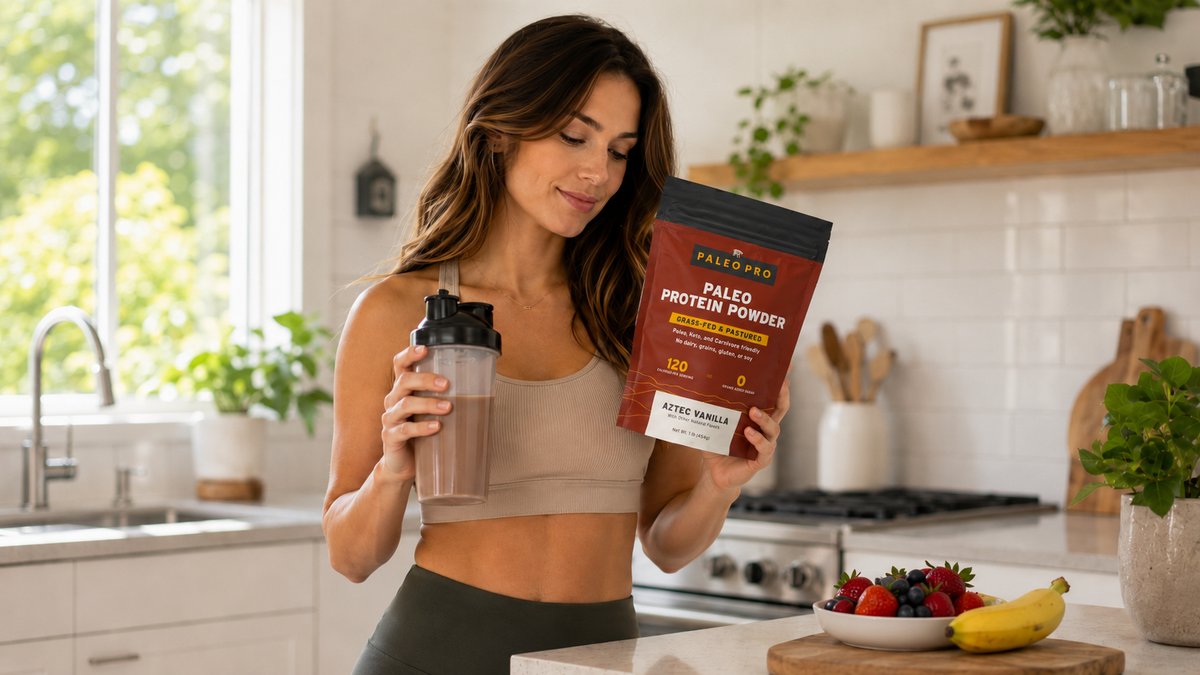
Whey protein is good for women — it's a complete, fast-digesting protein that supports muscle as effectively as any, and it's affordable and well-studied. The catch is that many women quit it: whey (especially concentrate) contains lactose that causes bloating, dairy can aggravate breakout-prone skin, and "women's" whey blends often add soy. A dairy-free complete protein like beef and egg white delivers whey's benefits without those drawbacks.
If you've ever felt gassy and bloated an hour after a whey shake, or noticed your skin flare when you started one, you're not imagining it — and you're not alone. Whey works, but it doesn't work for everyone, and the reasons are specific and physical, not a matter of willpower. This guide is fair to whey where it deserves credit, honest about where it trips women up, and clear about the dairy-free alternatives that keep the benefits and drop the problems.

The same complete, muscle-supporting amino profile as whey — from grass-fed beef and egg white, with zero dairy and no soy.
Is whey protein good for women?
Yes — on the merits, whey is a genuinely good protein. It's worth being clear-eyed about its strengths before picking it apart:
- It's complete and effective. Whey contains all nine essential amino acids and is high in leucine, the amino acid that triggers muscle protein synthesis. For building and maintaining muscle, it works.
- It's fast-digesting. Whey absorbs quickly, which makes it a popular post-workout choice.
- It's affordable and well-studied. Decades of research back it, and it's usually the cheapest complete protein per gram.
None of that is in dispute, and if whey agrees with you, it's a reasonable choice. But "does it work?" and "is it the best fit for you?" are different questions. For a large share of women, the answer to the second is no — because of three specific issues whey marketing rarely mentions. The good news is you can get whey's exact strengths — complete, muscle-supporting protein — without its downsides.

The same complete, muscle-supporting amino profile as whey — from grass-fed beef and egg white, with zero dairy and no soy.
Why does whey protein make some women bloat?
Lactose. Whey is a dairy product, and whey concentrate — the most common and cheapest form — retains about 5–8% lactose. The problem is that roughly two-thirds of adults worldwide lose most of their ability to digest lactose after childhood [1]. When undigested lactose reaches the gut, it ferments — and that's the gas, bloating, and cramping so many women feel within an hour of a shake.
A few nuances:
- Whey isolate is filtered to remove most lactose, so it bothers fewer people — but "fewer" isn't "none," and isolate costs more.
- Bloating isn't a sign the protein is "working." It's a digestive mismatch, full stop.
- If a protein reliably leaves you bloated, the fix isn't to push through it — it's to switch to a protein your gut doesn't have to fight. A dairy-free protein sidesteps lactose entirely.
Does whey protein cause acne or breakouts in women?
This one deserves an honest, careful answer, because it's often overstated. Here's what the evidence actually shows:
- Dairy and acne are associated — modestly. Large reviews find a consistent link between dairy intake, especially skim milk, and acne, with a plausible mechanism: dairy proteins can raise IGF-1, which increases the skin's oil production [2]. The effect is real but not dramatic.
- Whey specifically is not proven to cause acne. The whey-acne evidence is mostly uncontrolled case reports in young male athletes, and a 2024 randomized controlled trial found whey caused no significant worsening of acne [3]. So the honest statement is: whey might be a factor for some skin-prone people, but it hasn't been shown to cause breakouts, least of all in women.
What that means practically: if your skin is breakout-prone and you suspect your protein, a dairy-free option lets you remove dairy as a variable and see for yourself — without claiming it will "clear" anything. That's an honest reason to switch, not a scare tactic.
Is there soy in whey protein blends for women?
Often, yes — and it's worth understanding. Many protein powders, including "women's" formulas, use soy protein or soy lecithin. Two things are true at once here:
- The hormone fear is largely unfounded. The worry that soy "wrecks your hormones" isn't supported by the research — a meta-analysis in premenopausal women found soy and isoflavones did not change estradiol, estrone, or SHBG [4]. You don't need to fear soy for your hormones.
- But there are real reasons to skip it. Soy is one of the FDA's nine major allergens [5], and soy protein isolate is often a cheap way to inflate a protein number without adding quality. Plenty of women reasonably prefer a soy-free label — as a clean-label and allergen choice, not a hormone one.
What's the best dairy-free alternative to whey?
The goal isn't just "not whey" — it's to match whey's strengths (complete, muscle-supporting, high-leucine) while dropping the dairy. Two proteins do that best:
- Beef protein isolate is a complete protein that performs on par with whey for muscle and body composition when protein is matched — an eight-week training study found beef, chicken, and whey produced comparable gains [6]. It's naturally dairy-free and rich in glycine, the amino acid tied to collagen and connective tissue.
- Egg white protein is the original reference-standard protein (a biological value of 100) and complements beef's amino profile — dairy-free, soy-free, and complete.
Blended together, beef and egg white give you whey-level amino acids with zero lactose and no soy — which is exactly why they've become the go-to for women leaving whey behind. Single-source plant proteins (pea, rice) are dairy-free too, but usually incomplete on their own, so they're blended or dosed higher to compensate. For the full breakdown, see our guides to beef protein vs. whey and dairy-free protein powder.
Whey vs. beef vs. egg white vs. plant protein
Here's how the options compare on what matters when you're leaving whey:
| Protein type | Complete? | Dairy-free | Soy-free | Lactose | Muscle support |
|---|---|---|---|---|---|
| Whey concentrate | ✅ Yes | ❌ No | Varies | 5–8% | ✅ Strong |
| Whey isolate | ✅ Yes | ❌ No | Usually | Low | ✅ Strong |
| Beef protein isolate | ✅ Yes (DIAAS ~117) | ✅ Yes | ✅ Yes | None | ✅ Strong |
| Egg white protein | ✅ Yes (BV 100) | ✅ Yes | ✅ Yes | None | ✅ Strong |
| Soy protein | ✅ Yes | ✅ Yes | ❌ No | None | ✅ Good |
| Pea / rice (plant) | ⚠️ Incomplete alone | ✅ Yes | ✅ Yes | None | ⚠️ Moderate |
The takeaway: if whey agrees with you, keep using it — it's effective and cheap. If it bloats you, breaks you out, or you'd rather skip the soy that comes with many blends, beef and egg white match its completeness and muscle support with none of the dairy.
How do you switch from whey without losing progress?
Leaving whey doesn't mean starting over — a complete dairy-free protein slots right into the same routine. A few practical tips for the switch:
- Match the dose. Aim for the same 20–26 grams of protein per serving you were getting from whey, so your daily total doesn't drop.
- Keep the timing. If you had whey after workouts, use your new protein the same way — beef and egg white are complete, high-leucine proteins, so they support recovery just as well.
- Give your gut a week. If you switched because of bloating, most women notice the difference within a few days, but give any new food about a week to settle.
- Read the new label too. Dairy-free doesn't automatically mean clean — check that your replacement skips added sugar, soy filler, and gums, the same way you'd scrutinize any protein.
The goal is a one-for-one upgrade: same protein, same routine, minus the lactose and dairy.
Frequently asked questions
Is whey protein good for women? Yes — whey is a complete, effective, well-studied protein that supports muscle as well as any. The caveats are practical: whey concentrate contains lactose that bloats many women, dairy may aggravate breakout-prone skin, and some "women's" blends add soy. If whey agrees with you, it's a fine choice; if it bloats you, a dairy-free complete protein is a better fit.
Why does whey protein make me bloated? Whey concentrate contains 5–8% lactose, and about two-thirds of adults can't fully digest lactose after childhood [1] — the undigested lactose ferments in the gut, causing gas and bloating. Whey isolate has less lactose and bothers fewer people, but a dairy-free protein avoids the issue entirely.
Does whey protein cause acne? Dairy shows a modest association with acne, but whey specifically hasn't been proven to cause it — a 2024 randomized trial found no significant worsening [3]. If your skin is breakout-prone, a dairy-free protein lets you remove dairy as a possible factor, but no protein "clears" acne.
What is the best protein powder for women without bloating? A dairy-free, lactose-free complete protein — such as beef isolate blended with egg white — avoids the lactose that causes most protein-shake bloating, while still delivering all nine essential amino acids for muscle. Look for no added gums or sugar alcohols too, which can also cause bloating.
Is whey or plant protein better for women? Both are dairy-conscious choices, but whey is complete while single-source plant proteins (pea, rice) are usually incomplete alone. If you want dairy-free and complete, beef and egg white protein give you both — whey-level amino acids without the lactose or the incompleteness of most plant options.
Should women avoid soy protein? Not for hormone reasons — research shows soy doesn't alter women's estrogen or other reproductive hormones [4]. But soy is a top-nine allergen and often used as a cheap filler, so a soy-free label is a reasonable clean-label choice for many women.
Whey earns its reputation as an effective protein — but "effective" and "right for you" aren't the same. If it leaves you bloated or you'd rather skip the dairy and soy, you're not settling by switching: beef and egg white keep every benefit that made whey popular and drop the parts that made you quit.
Done fighting the post-shake bloat? Paleo Protein Powder is grass-fed beef isolate plus egg white — 26g of complete protein, no dairy, no soy, no lactose, monk-fruit sweetened, and backed by a 60-day money-back guarantee.
Sources
- National Institute of Diabetes and Digestive and Kidney Diseases (NIDDK). "Definition & Facts for Lactose Intolerance." niddk.nih.gov
- Juhl, C.R., et al. (2018). "Dairy Intake and Acne Vulgaris: A Systematic Review and Meta-Analysis of 78,529 Children, Adolescents, and Young Adults." Nutrients, 10(8), 1049. PMID: 30096883
- Sompochpruetikul, K., et al. (2024). "Whey protein and male acne: A double-blind, randomized controlled trial." Journal of Dermatology, 51(7), 1022–1025. PMID: 38291989
- Hooper, L., et al. (2009). "Effects of soy protein and isoflavones on circulating hormone concentrations in pre- and post-menopausal women: a systematic review and meta-analysis." Human Reproduction Update, 15(4), 423–440. PMID: 19299447
- U.S. Food & Drug Administration. "Food Allergies." (Soy is one of the nine major food allergens.) fda.gov
- Sharp, M.H., et al. (2018). "The Effects of Beef, Chicken, or Whey Protein After Workout on Body Composition and Muscle Performance." Journal of Strength and Conditioning Research, 32(8), 2233–2242. PMID: 28399016
