Almond Flour Protein Muffins (Grain-Free, Paleo)
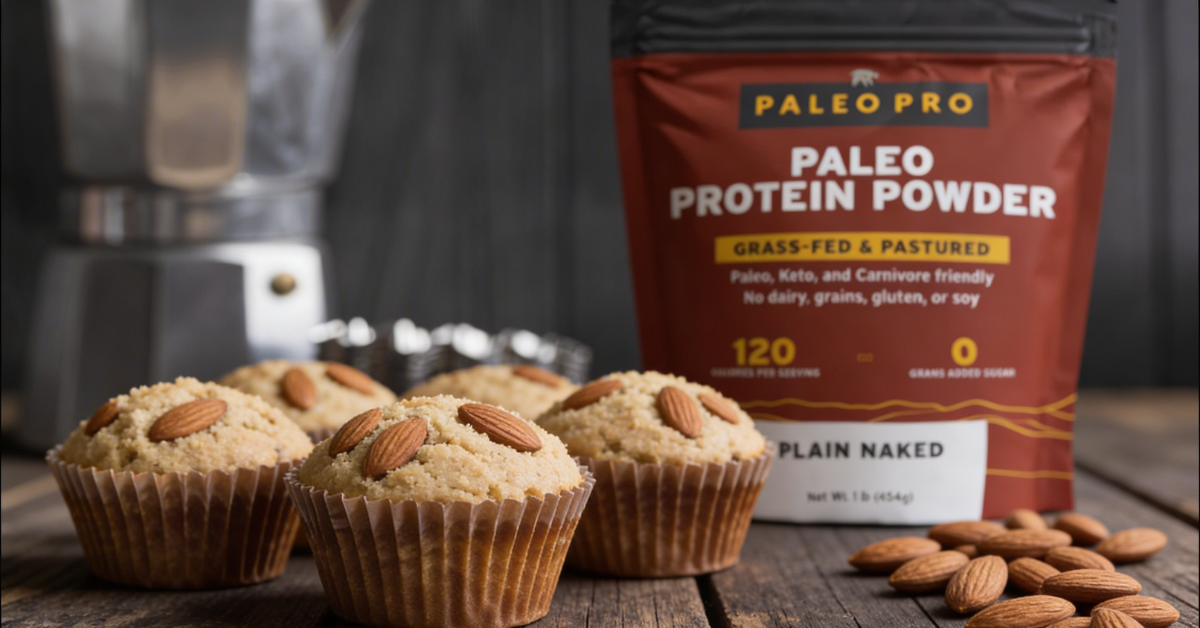
These almond flour protein muffins pack 15g of protein per muffin with zero grains, zero dairy, and zero refined sugar. Almond flour gives them a soft, tender crumb that wheat flour can't match. Beef protein powder adds the protein without drying them out. One bowl, 25 minutes from start to finish, and they keep for five days — which makes them the easiest paleo breakfast prep you'll do all week.

26g grass-fed protein that blends clean into shakes, coffee, and baking.
Why Almond Flour Works Better Than Regular Flour
Most protein muffin recipes use wheat flour or oat flour as the base. Both work fine if grains aren't a concern. But if you're paleo, Whole30, or just avoiding grains, almond flour is the better foundation — and not just for dietary reasons.
Moisture. Almond flour has a higher fat content than wheat flour (about 14g per quarter cup vs. nearly zero). That fat keeps the crumb soft and moist, which matters when you're adding protein powder. Protein powder absorbs liquid aggressively. Pair it with a dry flour and you get hockey pucks. Pair it with almond flour and the natural fat compensates.
Flavor. Almond flour has a subtle, slightly sweet nuttiness that works with both vanilla and chocolate protein powder. It doesn't compete with the flavor — it supports it.
Nutrition. Beyond the protein you're adding, almond flour brings its own: 6g of protein per quarter cup, plus healthy fats, vitamin E, and magnesium. Your muffins are doing more nutritional work before the protein powder even enters the picture.
Texture. Almond flour produces a tender, almost cake-like crumb. Not dense like coconut flour. Not crumbly like some grain-free alternatives. Just soft, slightly fudgy, and satisfying.
The one thing almond flour doesn't do: provide structure the way wheat gluten does. That's why eggs matter in this recipe — they're doing the structural work that gluten would normally handle.

26g grass-fed protein that blends clean into shakes, coffee, and baking.
The Recipe: Classic Almond Flour Protein Muffins
This is the base recipe. It works with any flavor of protein powder — vanilla, chocolate, or unflavored. Adjust the add-ins based on what you're in the mood for.
Ingredients
| Ingredient | Amount | Purpose |
|---|---|---|
| Almond flour (finely ground) | 1½ cups (168g) | Structure and moisture |
| Beef protein powder | ½ cup (about 2 scoops) | Protein — 15g+ per muffin |
| Eggs | 3 large | Binding and structure |
| Coconut oil (melted) | ¼ cup | Moisture and fat |
| Maple syrup or honey | 2 tablespoons | Sweetness (optional — skip for Whole30/keto) |
| Vanilla extract | 1 teaspoon | Flavor |
| Baking soda | ½ teaspoon | Leavening |
| Apple cider vinegar | 1 teaspoon | Activates baking soda |
| Salt | ¼ teaspoon | Flavor balance |
Instructions
-
Preheat your oven to 350°F (175°C). Line a 12-cup muffin tin with parchment liners or grease with coconut oil.
-
Mix dry ingredients. Whisk almond flour, protein powder, baking soda, and salt in a large bowl. Break up any clumps in the protein powder — it likes to clump.
-
Mix wet ingredients. In a separate bowl (or just make a well in the dry), whisk eggs, melted coconut oil, maple syrup (if using), vanilla extract, and apple cider vinegar.
-
Combine. Pour wet into dry and stir until just combined. Don't overmix. The batter will be thicker than regular muffin batter — that's normal with almond flour. If it feels too thick to scoop, add 1-2 tablespoons of water or almond milk.
-
Fill. Divide batter evenly among 10-12 muffin cups (about ¾ full). This recipe makes 10 larger muffins or 12 standard.
-
Bake. 18-22 minutes at 350°F. They're done when a toothpick in the center comes out clean and the tops are golden. Don't overbake — almond flour muffins go from perfect to dry quickly. Start checking at 18 minutes.
-
Cool. Let them sit in the pan for 5 minutes, then transfer to a wire rack. They firm up as they cool.
Nutrition Per Muffin (makes 10)
| Nutrient | Amount |
|---|---|
| Protein | 15g |
| Calories | 195 |
| Fat | 13g |
| Carbs | 6g |
| Net Carbs | 4g |
| Fiber | 2g |
| Sugar | 2g |
Nutrition calculated with PaleoPro Vanilla protein powder and maple syrup. Numbers vary slightly by protein powder brand and whether you include the sweetener.
Variations: 4 Ways to Customize
Blueberry Almond Flour Protein Muffins
Fold ¾ cup fresh or frozen blueberries into the batter after combining wet and dry. If using frozen, don't thaw — they'll bleed less. Adds about 1g of carbs per muffin. These are the best version for someone who wants a "normal muffin" experience without the grains.
Chocolate Chip Protein Muffins
Use vanilla or unflavored protein powder. Fold in ½ cup of dairy-free dark chocolate chips after mixing. Look for chips sweetened with coconut sugar for a paleo-compliant option. For a double chocolate version, use chocolate protein powder plus the chips.
Banana Protein Muffins
Replace the maple syrup with 1 mashed ripe banana. This adds natural sweetness, moisture, and about 3g of extra carbs per muffin. The banana also acts as a binding agent, so you could reduce the eggs to 2 if you prefer a denser crumb. Not strict paleo for the very few who exclude banana — but banana is broadly accepted on paleo.
Cinnamon Streusel Protein Muffins
Add 1 teaspoon of cinnamon and ¼ teaspoon of nutmeg to the dry ingredients. For the streusel top: mix 3 tablespoons almond flour, 1 tablespoon coconut oil, 1 tablespoon coconut sugar, and ½ teaspoon cinnamon. Crumble on top before baking. Adds 15-20 calories per muffin. These taste like coffee cake and they will disappear fast.
Tips for Perfect Protein Muffins Every Time
Use finely ground almond flour, not almond meal. Almond meal has the skins ground in and produces a grittier texture. Finely ground blanched almond flour (like Bob's Red Mill or Costco's Kirkland brand) gives you a smooth, tender crumb.
Don't substitute coconut flour 1:1. Coconut flour absorbs 3-4x more liquid than almond flour. If you want to use coconut flour, you'd need to reduce it to about ⅓ cup and add extra eggs and liquid. It's a different recipe at that point. Stick with almond flour for this one.
Measure protein powder by weight if possible. Scoops vary between brands. Two scoops of one brand might be 50g; two scoops of another might be 70g. Too much protein powder makes muffins dry and chalky. The sweet spot is roughly 50-60g for this recipe.
Let the batter rest 5 minutes before scooping. Almond flour and protein powder both absorb liquid over time. A 5-minute rest lets the batter hydrate fully, which gives you a more consistent crumb and helps the muffins rise evenly.
Don't overbake. This is the most common mistake with grain-free muffins. They don't brown on top the same way wheat muffins do, so people leave them in too long. The toothpick test is your friend. Pull them when it comes out clean — even if the tops look pale. They'll darken slightly as they cool.
Store properly. Room temperature in an airtight container for 2-3 days. Refrigerator for 4-5 days. Freezer for up to 2 months. Reheat from frozen: 15 seconds in the microwave or 10 minutes in a 300°F oven.
Meal Prep Strategy
These muffins exist for busy mornings. Here's how to use them.
Sunday prep: Bake a batch of 10-12. Takes 30 minutes including cleanup. Store in the fridge.
Weekday morning: Grab one or two muffins. Total time: 10 seconds. Pair with black coffee and you've got a 15-minute paleo breakfast in about 15 seconds.
Post-workout: Two muffins give you 30g of protein. Not as fast as a shake, but more satisfying and portable. Toss two in a ziplock bag for the gym.
Kids' snacks. Take out the protein powder and add an extra quarter cup of almond flour. The recipe works as a regular muffin too — kids won't know the difference. (Leave the protein in for older kids who need it.)
Frequently Asked Questions
Can I use coconut flour instead of almond flour?
Not as a 1:1 swap. Coconut flour absorbs significantly more liquid — roughly 3-4 times more than almond flour. If you want to use coconut flour, reduce the amount to ⅓ cup, add 2 extra eggs, and increase the coconut oil to ⅓ cup. The texture will be denser and more cake-like. For the best results with this recipe, stick with finely ground almond flour.
Can I use whey protein instead of beef protein?
Yes, the recipe works with any protein powder. The ratios stay the same. But whey adds dairy, which means the muffins are no longer paleo or dairy-free. If dairy isn't a concern for you, whey works fine from a baking perspective. If you're avoiding dairy, beef protein isolate or egg white protein keeps these muffins clean.
How do I make these keto?
Skip the maple syrup. That removes about 2g of carbs per muffin, bringing net carbs to roughly 2-3g each. You can add a few drops of liquid stevia or monk fruit sweetener for sweetness without carbs. The almond flour base is already keto-friendly — high fat, low carb. Everything else in the recipe is keto-compliant as written.
Why are my protein muffins dry?
Three possible causes: too much protein powder (measure by weight, not scoop), overbaking (start checking at 18 minutes), or not enough fat (don't reduce the coconut oil). Protein powder absorbs moisture aggressively, so this recipe deliberately uses more fat than a typical muffin recipe. If they still come out dry, add one more egg or 2 tablespoons of unsweetened applesauce to the next batch.
Can I make these egg-free?
Eggs provide the structure that gluten normally handles in grain-free baking. Removing them is tricky. Your best substitutes: 3 "flax eggs" (1 tablespoon ground flaxseed + 3 tablespoons water per egg, rested 5 minutes) or ¾ cup mashed banana. The texture will be denser and won't rise as much. Not ideal, but workable if eggs are excluded on your diet (AIP elimination phase, for example).
How many calories are in each muffin?
About 195 calories per muffin with 15g protein, 13g fat, and 4g net carbs (recipe makes 10). Without the maple syrup, calories drop to about 180. These aren't low-calorie — the almond flour and coconut oil contribute healthy fats that keep you full. Two muffins for breakfast gives you 30g protein and 390 calories, which is a solid meal for most people.
Need protein powder for these muffins? PaleoPro Paleo Protein Powder works in Vanilla, Chocolate, or Naked (unflavored). Grass-fed beef protein isolate with egg white protein — four ingredients, paleo-friendly, and designed to mix smoothly into batter. For more baking ideas, check our protein muffin recipes, chocolate protein muffins, or the full recipe collection.
Sources:
- USDA FoodData Central. Nutrient data for almond flour. fdc.nal.usda.gov
- Sharp, M.H., et al. (2018). "The Effects of Beef Protein Isolate and Whey Protein Isolate Supplementation on Lean Mass and Strength." JISSN, 15(1). PMC
- Jager, R., et al. (2017). "International Society of Sports Nutrition Position Stand: Protein and Exercise." Journal of the International Society of Sports Nutrition, 14(1), 20. PMC
