Best Beef Organ Supplements (2026): How to Choose the Right One
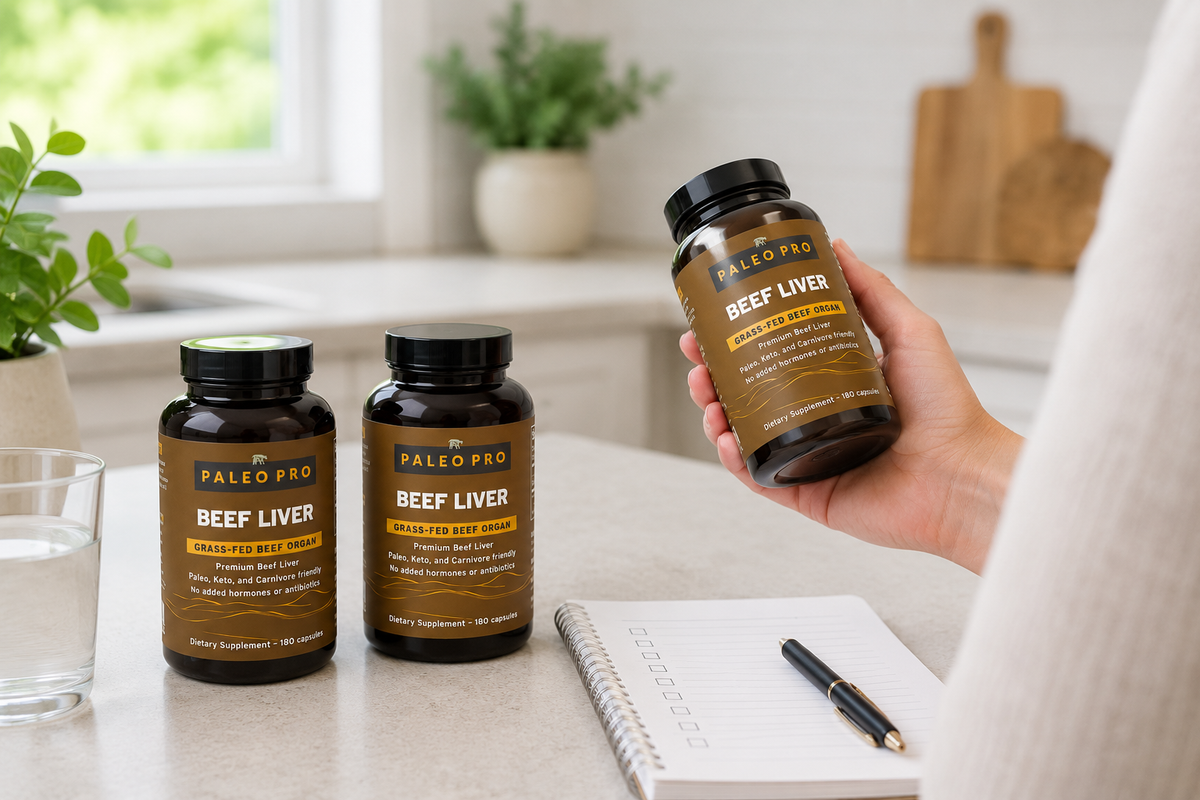
The best beef organ supplement is genuinely grass-fed and pasture-raised, third-party tested for purity, freeze-dried or low-heat processed to protect nutrients, filler-free, and transparent about which organs it contains and in what amount. A multi-organ blend covers more nutrients than liver alone. Judge an organ supplement by its sourcing and testing, not its marketing.
Search "best beef organ supplements" and you'll get a wall of ranked lists that are really affiliate commissions in a trench coat — the same handful of brands reshuffled by who pays the most. This guide does it the other way around. It sets the criteria first, explains why each one matters, and is honest about the category's biggest problem: a lot of organ supplements aren't what their labels say they are. Get the criteria right and you can judge any product on the shelf, including ours.

Want just the single most nutrient-dense organ? Grass-fed desiccated liver, 3,000mg a serving.
How to choose the best beef organ supplement
There's no secret ranking. There's a set of criteria, applied honestly. Here are the six that separate a genuine organ supplement from a jar of ground-up filler:
- Genuinely grass-fed and pasture-raised. Organs concentrate whatever the animal was raised on — the good and the bad. Grass-fed, pasture-raised cattle from clean environments carry a better nutrient profile and a lower contaminant load than conventionally raised animals. "Grass-fed" should mean the whole life, not a finishing period.
- Third-party tested — and honestly labeled. This is where the category falls down. A regulatory analysis of bovine liver supplements found that 59% had at least one instance of labeling noncompliance, and 85% of the nutrient-content claims on labels were noncompliant [1]. In a market where more than half of products misstate something on the label, independent lab testing isn't a luxury — it's the only way to know what's actually in the capsule.
- The right processing method. How the organ is dried decides how much of the nutrition survives. Low-temperature and cold processing preserve protein structure and heat-sensitive nutrients far better than high-heat methods; lab work comparing processing techniques found cold processing retained significantly more intact protein than heat-based extraction [2]. Freeze-dried beats heat-desiccated for nutrient retention.
- A multi-organ blend, not just liver. Liver is the most famous organ for a reason, but it isn't the whole story. Heart is the richest dietary source of CoQ10 [3]; kidney concentrates selenium; spleen is one of the densest sources of heme iron of any food [4]. A blend covers a broader range of nutrients than liver alone — and it dilutes liver's very high vitamin A, which matters for daily use (more on that below).
- A clean, filler-free capsule. The ingredient list should read like the organs and a capsule — nothing else. Flow agents, grains, soy, and "proprietary blends" that hide the actual amounts are red flags. Transparency about how much of each organ you're getting is a baseline, not a bonus.
- Honest dosing and claims. A quality brand tells you the serving size, what each organ provides, and what the product won't do. Organ supplements support nutrient intake and energy from whole food; they are not medicine. Anyone promising to cure something is telling you more about their marketing than their sourcing.
Score any product against those six and the picture clears fast — which means the best beef organ supplement isn't the loudest brand or the one with the biggest influencer, it's the one that's genuinely grass-fed, third-party tested, and honest about what's actually in the bottle.

Want just the single most nutrient-dense organ? Grass-fed desiccated liver, 3,000mg a serving.
What should a beef organ supplement actually contain?
The point of "nose-to-tail" is that different organs do different jobs. Each one concentrates a different set of nutrients, which is why a thoughtful blend outperforms any single organ. Here's what the main organs bring to the table:
| Organ | Standout nutrients | Why it matters |
|---|---|---|
| Liver | Vitamin A (retinol), B12, copper, folate, choline | The most nutrient-dense organ; whole-food B12 and preformed vitamin A |
| Heart | CoQ10, protein | Richest dietary source of CoQ10 (~11–13 mg/100g) [3] |
| Kidney | Selenium, B12, riboflavin | Selenium supports thyroid and antioxidant enzymes, without liver's high vitamin A |
| Spleen | Heme iron | One of the densest heme-iron foods — 5–8x more than liver [4] |
| Pancreas | Digestive enzymes, protein | Rounds out the traditional nose-to-tail profile |
A few of these deserve a closer look. Liver's iron and spleen's iron are heme iron — the form found in animal foods, which the body absorbs at 15–35% versus 2–20% for the non-heme iron in plants and iron pills, and with fewer of the digestive side effects [4]. That's meaningful, because iron deficiency is the most common nutritional deficiency in the world [5]. Liver also delivers choline, a nutrient that's under-consumed and left out of most multivitamins entirely [6]. This is the honest case for organs over a synthetic multivitamin: whole-food nutrients, in the form and combination your body evolved to use.
The takeaway for choosing a product: look for a supplement that names its organs and, ideally, tells you roughly how much of each you're getting. A blend of grass-fed liver, heart, kidney, spleen, and pancreas gives you the broadest coverage in one capsule.
Single-organ or multi-organ blend — which is better?
It depends on your goal, and both have a place.
A single-organ supplement — most often liver — makes sense when you're after what that one organ does best. Liver is the champion of vitamin A, B12, and copper, and a dedicated grass-fed desiccated liver is the most direct way to get them. The catch is that liver is so rich in preformed vitamin A that daily high doses can push past sensible limits over time, and it's a nutrient pregnant women in particular need to watch [7].
A multi-organ blend spreads the load. By combining liver with heart, kidney, spleen, and pancreas, a blend broadens the nutrient range — CoQ10, selenium, extra heme iron — while keeping any single nutrient, including vitamin A, in a more moderate per-serving amount. For most people who want general, everyday nose-to-tail nutrition, a blend is the more sensible default. For a specific target — say, maximizing vitamin A and B12 — single-organ liver has the edge.
Neither is "better" in the abstract. The best choice is the one matched to why you're taking it.
How can you tell if a beef organ supplement is high quality?
Once you've decided single-organ or blend, quality comes down to three checks you can make before you buy:
Sourcing you can verify. Look for explicit grass-fed, pasture-raised sourcing and, ideally, named countries of origin. Because organs concentrate nutrients, they can also concentrate contaminants like cadmium and lead if the animals were raised in poor conditions — so grass-fed sourcing from clean environments isn't just a nutrition story, it's a safety one. This is a reason to choose quality-sourced organs, not a reason to fear organ meat.
Proof of testing. A brand that third-party tests will say so and, increasingly, show you. Given that most of the category misstates something on the label [1], "trust us" isn't good enough — you want a product that's independently verified for purity and potency.
Processing that protects the nutrients. Freeze-dried or low-temperature processing preserves more of the nutrient profile than high-heat desiccation [2]. If a brand is proud of its process, it'll tell you.
Everything else — flashy packaging, influencer endorsements, "women's" or "men's" formulas — is marketing. The three checks above are what actually predict whether a supplement delivers.
Frequently asked questions
What is the best beef organ supplement? The best beef organ supplement is one that's genuinely grass-fed and pasture-raised, third-party tested for purity, freeze-dried or low-heat processed, filler-free, and transparent about its organs and dosing. For broad everyday nutrition, a multi-organ blend of liver, heart, kidney, spleen, and pancreas covers the most ground; for maximum vitamin A and B12, single-organ liver is best.
Do beef organ supplements actually work? They work as a concentrated whole-food source of nutrients — vitamin A, B12, heme iron, copper, selenium, CoQ10, and choline — that are otherwise hard to get without eating organ meat [4][6][8]. They deliver those nutrients in absorbable, food-based form. What they don't do is act like medicine or replace a balanced diet; treat any product promising to cure something with skepticism.
Are beef organ supplements safe? For most healthy adults, yes, taken at the recommended serving. The main thing to watch is liver's high preformed vitamin A: single-organ liver taken in large daily doses can accumulate over time, and pregnant women should be cautious with vitamin A and check with their doctor [7]. Multi-organ blends keep vitamin A more moderate per serving. People with Wilson's disease or who are on medications should consult a clinician first.
What should I look for in a beef organ supplement? Grass-fed/pasture-raised sourcing, third-party testing, freeze-dried or low-heat processing, a clean filler-free capsule, and transparent labeling of which organs and how much. Those five signals matter far more than the brand's marketing.
Is a single-organ or multi-organ supplement better? A multi-organ blend gives broader nutrient coverage and keeps any single nutrient more moderate, which suits everyday use. A single-organ liver supplement is better if you specifically want the most vitamin A, B12, and copper. Choose based on your goal.
How many beef organ capsules should I take per day? Follow the label — a typical serving is around six capsules once a day with water. More isn't automatically better, especially with liver-heavy products, because of vitamin A. Start at the recommended serving.
Are beef organ supplements worth the money? If the product is genuinely grass-fed and third-party tested, they're a reasonable, convenient way to get nutrients you'd otherwise have to source and cook fresh organ meat for. If it's cheaply sourced or unverified, you're paying for ground-up filler. Quality is what makes them worth it.
You now know the six criteria, what belongs in a good blend, and the three quality checks that cut through the marketing. If you want the short version — a grass-fed, third-party-tested, five-organ blend that's honest about what's inside — here's the one that clears every criterion in this guide.
Ready to feel the difference real organ nutrition makes? Beef Organ Complex is a grass-fed, five-organ blend — liver, heart, kidney, spleen, and pancreas — third-party tested, filler-free, and backed by a 60-day money-back guarantee. Prefer just the most nutrient-dense organ? Our grass-fed Beef Liver delivers 3,000mg a serving. Compare the full lineup in our organ supplements collection, and for the women's-specific breakdown see Best Beef Organ Supplements for Women.
Sources
- Silva, C.S., Dahm, M.M., & Hellberg, R.S. (2022). "Bovine Liver Supplement Labeling Practices and Compliance With U.S. Regulations." Journal of Dietary Supplements, 19(1), 4–19. PMID: 33148079
- Kang, S.N., et al. (2017). "Nutritional Quality and Physicochemical Characteristics of Defatted Bovine Liver Treated by Supercritical Carbon Dioxide and Organic Solvent." Korean Journal for Food Science of Animal Resources, 37(1), 29–40. PMID: 28316468
- Mattila, P., & Kumpulainen, J. (2001). "Coenzymes Q9 and Q10: Contents in Foods and Dietary Intake." Journal of Food Composition and Analysis, 14(4), 409–417. PMID: 11257723
- Gallo Ruelas, M., et al. (2024). "A comparative analysis of heme vs non-heme iron administration: a systematic review and meta-analysis of randomized controlled trials." European Journal of Nutrition, 64(1), 30. PMID: 39708071
- GBD 2021 Anaemia Collaborators (2023). "Prevalence, years lived with disability, and trends in anaemia burden by severity and cause, 1990–2021." The Lancet Haematology, 10(9), e713–e734. PMID: 37536353
- Zeisel, S.H., & da Costa, K.A. (2009). "Choline: an essential nutrient for public health." Nutrition Reviews, 67(11), 615–623. PMID: 19906248
- Rothman, K.J., et al. (1995). "Teratogenicity of high vitamin A intake." New England Journal of Medicine, 333(21), 1369–1373. PMID: 7477116
- U.S. Department of Agriculture, FoodData Central — Beef liver, braised (FDC ID 168626). USDA FoodData Central
