Best Beef Liver Supplements (2026): How to Choose the Right One
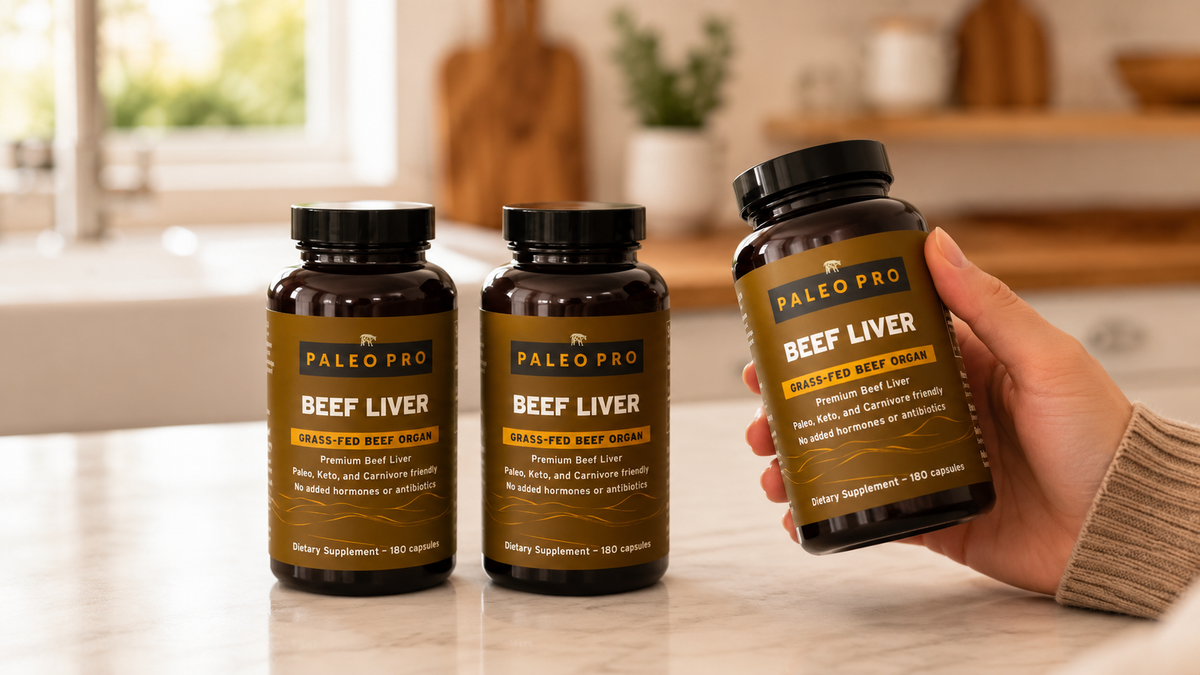
The best beef liver supplement is genuinely grass-fed and pasture-raised, third-party tested for purity, gently dried to protect nutrients, filler-free, and honest about its dose — including how much vitamin A you're getting per serving. A quality product tells you its sourcing and its numbers. Judge a liver supplement by those, not by its marketing.
Search "best beef liver supplements" and you'll get the usual ranked lists — mostly the same brands reshuffled by affiliate payout. This guide works the other way around. It sets the criteria first, explains why each one matters, and is honest about the category's real problem: a lot of liver supplements aren't what their labels claim. Learn the criteria and you can judge any product on the shelf, ours included.

Grass-fed, gently desiccated liver that clears every criterion here — 3,000mg a serving, third-party tested, filler-free.
How to choose the best beef liver supplement
There's no secret ranking — there's a set of criteria applied honestly. Five separate a genuine liver supplement from a jar of filler:
- Genuinely grass-fed and pasture-raised. Liver filters what the animal takes in, so it can carry more contaminants like cadmium and lead than muscle meat — and those track with how the animal was raised [1]. Grass-fed, pasture-raised cattle from clean environments mean a lower contaminant load. On liver, sourcing is a purity issue, not just a nutrition one.
- Third-party tested — and honestly labeled. This is where the category falls down. A regulatory analysis of bovine liver supplements found 59% had at least one labeling-compliance issue, and 85% of nutrient-content claims were noncompliant [2]. When most products misstate something, independent lab testing is the only way to know what's actually in the capsule.
- Gently dried to protect nutrients. How the liver is dried decides how much nutrition survives. Freeze-drying and low-temperature processing preserve heat-sensitive nutrients and protein structure better than high-heat desiccation [3]. If a brand is proud of its process, it'll say so.
- A clean, filler-free capsule. The ingredient list should read like liver and a capsule — nothing else. Flow agents, grains, soy, and "proprietary blends" that hide amounts are red flags.
- Honest about vitamin A and dose. Liver is so rich in preformed vitamin A that a quality brand tells you how many milligrams of liver — and ideally how much vitamin A — you get per serving, so you can keep your intake sensible [4]. Transparency here is a safety feature, not a nicety.
Score any product against those five and the picture clears fast — which means the best beef liver supplement isn't the loudest brand, it's the one that's genuinely grass-fed, third-party tested, and honest about what's in the bottle.

Grass-fed, gently desiccated liver that clears every criterion here — 3,000mg a serving, third-party tested, filler-free.
What to look for on the label
Flip the bottle over and three numbers tell you most of what you need:
- Milligrams of liver per serving. A common, honest serving is around 3,000mg of desiccated liver (usually six capsules). More isn't automatically better — see vitamin A, below.
- Vitamin A content. Because liver's vitamin A is preformed and fat-soluble, a transparent label lets you keep your total intake under the 3,000 mcg RAE (10,000 IU) daily upper limit [4]. A product that hides this is hiding the one number that matters for safe daily use.
- Sourcing and testing statements. Look for explicit grass-fed, pasture-raised language, a named country of origin, and a third-party testing claim you can verify [2].
Everything else on the front of the bottle is marketing. These three lines are the product.
Grass-fed desiccated vs freeze-dried — which is better?
Both are legitimate; the difference is nutrient retention. Freeze-dried liver is frozen and vacuum-dried at very low temperature, which best preserves heat-sensitive nutrients [3]. Desiccated is a broader term for dried liver, and quality depends on whether the drying was gentle or high-heat. A low-temperature desiccated liver and a freeze-dried one are both fine choices; a high-heat, cheaply processed one loses more.
The honest bottom line: prioritize gentle processing and clean sourcing over the specific label word. A grass-fed, third-party-tested, gently dried liver is a great supplement whether it says "desiccated" or "freeze-dried."
Red flags to avoid
The criteria, inverted, are your warning signs. Walk away from a liver supplement that shows any of these:
- No third-party testing. Given that most of the category misstates its labels [2], "trust us" isn't good enough.
- A "proprietary blend" with no per-serving amount. If you can't see the dose, you can't judge it — or keep your vitamin A in check.
- No named sourcing. No mention of grass-fed, pasture-raised, or country of origin means you're buying blind, and on liver that's a purity gamble [1].
- No vitamin A figure. The single number that matters most for safe daily use, conveniently missing.
- Miracle claims. Any product promising to cure, detox, or fix something is telling you about its marketing, not its liver.
Spot two or more of these and it doesn't matter how good the packaging looks — it hasn't earned your trust.
Are beef liver supplements worth it?
If the product is genuinely grass-fed and third-party tested, a liver supplement is a convenient, well-absorbed way to get nutrients — heme iron, B12, vitamin A, copper, choline — that you'd otherwise have to source and cook fresh liver for, which most people won't. If it's cheaply sourced or unverified, you're paying for ground-up filler, and given the category's labeling record [2], that risk is real. Quality is the entire difference between "worth it" and "waste." Whether you want liver alone or a broader profile is a separate question — a multi-organ blend spreads the nutrients (and keeps vitamin A more moderate) across five organs.
Frequently asked questions
What is the best beef liver supplement? The best one is genuinely grass-fed and pasture-raised, third-party tested for purity, gently dried (freeze-dried or low-temperature), filler-free, and transparent about its milligrams of liver and vitamin A per serving [1][2][4]. Those signals matter far more than the brand's ranking on an affiliate list.
What should I look for in a beef liver supplement? Grass-fed/pasture-raised sourcing, third-party testing, gentle processing, a clean filler-free capsule, and an honest dose — especially a stated vitamin A amount [1][2][4]. Check the label's numbers, not the front-of-bottle claims.
Are grass-fed beef liver pills better? For liver, yes. Grass-fed, pasture-raised sourcing means a lower contaminant load, which matters more for liver than for muscle meat because the liver processes what the animal takes in [1]. It's the premium label most worth paying for here.
How much beef liver should a supplement contain? A typical quality serving is around 3,000mg of desiccated liver, often six capsules. Because of vitamin A, more isn't automatically better — the right amount is one that delivers the nutrients while keeping your total vitamin A within the daily upper limit [4].
Freeze-dried or desiccated beef liver — which should I buy? Either, if it's gently processed. Freeze-drying preserves the most heat-sensitive nutrients, but a low-temperature desiccated liver is also fine [3]. Prioritize gentle processing and clean grass-fed sourcing over the exact term.
Are cheaper beef liver supplements lower quality? Not automatically — but price alone tells you little. What predicts quality is grass-fed sourcing, third-party testing, and honest labeling [2]. A lower-priced supplement that clears all three can match a premium one; an expensive one that doesn't is still overpaying for the unknown.
You now have the five criteria, the three label numbers, and the processing rule. Apply them and you can pick a genuine liver supplement anywhere — including the short version below.
Ready for liver that clears every criterion here? Grass-fed Beef Liver is 3,000mg of gently desiccated, grass-fed, pasture-raised liver per serving, third-party tested for purity, filler-free, and backed by a 60-day money-back guarantee. Want a broader profile? Our Beef Organ Complex adds heart, kidney, spleen, and pancreas. Compare quality-first in grass-fed vs regular beef liver.
Sources
- European Food Safety Authority (2009–2024). "Metals as contaminants in food" (cadmium and lead higher in liver than muscle meat; source-dependent). efsa.europa.eu
- Silva, C.S., Dahm, M.M., & Hellberg, R.S. (2022). "Bovine Liver Supplement Labeling Practices and Compliance With U.S. Regulations." Journal of Dietary Supplements, 19(1), 4–19. PMID: 33148079
- Kang, S.N., et al. (2017). "Nutritional Quality and Physicochemical Characteristics of Defatted Bovine Liver Treated by Supercritical Carbon Dioxide and Organic Solvent." Korean Journal for Food Science of Animal Resources, 37(1), 29–40. PMID: 28316468
- NIH Office of Dietary Supplements (2024). "Vitamin A and Carotenoids — Health Professional Fact Sheet" (UL 3,000 mcg RAE / 10,000 IU per day). ods.od.nih.gov
