How Much Protein Is in Beef and Steak? Full Comparison Chart
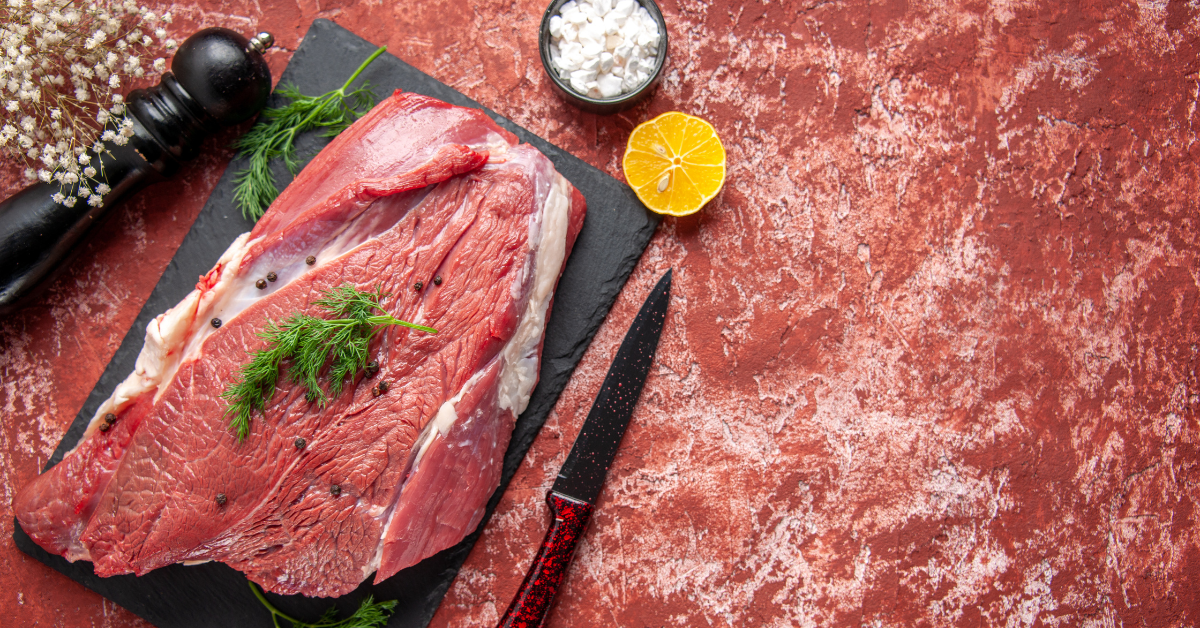
A 3-ounce (85 g) serving of cooked beef contains about 22 to 30 grams of protein, depending on the cut, according to USDA FoodData Central. Braised roasts sit at the top of that range, lean steaks in the middle, and ground beef at the bottom whatever its fat level. Fattier grinds don't lose much protein; they add calories. Here's the full breakdown, every major cut and every common meat, so you can stop guessing and start knowing.

26g of grass-fed beef protein per scoop — the protein of a steak, without cooking one.
Ground Beef Protein by Fat Content
Ground beef is the most common beef people buy. Here's the surprise in the USDA data: once it's cooked, the lean-to-fat ratio barely moves the protein. It moves the fat and the calories.
All values are for 3 oz (85g) cooked weight (broiled patties):
| Ground Beef Type | Protein | Calories | Fat | Protein per Calorie | FDC ID |
|---|---|---|---|---|---|
| 95/5 (extra lean) | 22.4g | 148 | 5.8g | Best ratio | 171791 |
| 93/7 (extra lean) | 22.3g | 164 | 7.6g | Best ratio | 174752 |
| 90/10 (lean) | 22.2g | 184 | 10.0g | Very good | 174031 |
| 85/15 | 22.0g | 212 | 13.1g | Good | 174032 |
| 80/20 (regular) | 21.9g | 230 | 15.1g | Moderate | 171797 |
| 75/25 | 21.8g | 237 | 16.1g | Lower | 174038 |
| 70/30 | 21.6g | 235 | 15.9g | Lowest | 168651 |
The difference between extra lean (93/7) and regular (80/20): 0.4g of protein and 66 calories per 3 oz, almost all of it fat. If you're trying to hit protein targets without overshooting calories, 90/10 or 93/7 is the move. If you're keto or carnivore and want the fat? 80/20 works.
Quick note: these numbers are cooked. Raw ground beef weighs more but has the same total protein; it just loses water during cooking. A 4 oz raw patty becomes roughly a 3 oz cooked patty. The protein stays.

26g of grass-fed beef protein per scoop — the protein of a steak, without cooking one.
Steak Protein by Cut
Now the fun part. How much protein is in your steak?
All values for 3 oz (85g) cooked, lean only (separable fat trimmed):
| Steak Cut | Protein | Calories | Fat | Notes | FDC ID |
|---|---|---|---|---|---|
| Top sirloin | 26.0g | 156 | 4.9g | Most protein per 3 oz of the steaks here | 168634 |
| Tenderloin (filet mignon) | 24.6g | 170 | 7.1g | Most tender | 171811 |
| NY strip (top loin) | 24.9g | 161 | 6.0g | Good balance of flavor and protein | 171813 |
| Rib eye (lean only) | 23.9g | 175 | 8.8g | Most marbled before trimming | 172142 |
| Flank steak | 23.7g | 158 | 6.3g | Lean, flavorful | 174774 |
| T-bone (choice) | 22.1g | 168 | 8.2g | Two muscles | 168644 |
| Inside skirt steak | 22.7g | 174 | 8.6g | Great for fajitas and stir-fry | 168744 |
Top sirloin leads the steaks at 26.0g per 3 oz with 4.9g of fat, and it's a reasonable price, which is why it's the default protein steak. Tenderloin and NY strip are close behind. If you want a steak that's both high-protein and enjoyable to eat, those three are the sweet spot.
Rib eye is the most marbled steak on the list, and USDA's lean-only numbers (23.9g protein, 8.8g fat) assume you trim away the fat you can see. Most people don't, so real rib eye runs fattier. Nobody picks rib eye for macros. They pick it because intramuscular fat is what makes steak taste like steak.
Steak Protein Per Ounce, Per 100g, and Per Pound
Quick conversions for the portions people actually ask about. Cooked values, lean steaks from the table above; see the raw-vs-cooked section below for why the two differ.
| Portion | Protein (cooked, lean steak) |
|---|---|
| 1 ounce of steak | 7.4 to 8.7g |
| 100 grams of steak | 26 to 30.6g |
| 6-ounce top sirloin | 52g |
| 8-ounce rib eye (lean only) | 64g |
| 1 pound of 90/10 ground beef (raw) | about 91g, raw or cooked |
Rule of thumb: a cooked ounce of lean steak carries about 8 grams of protein. Multiply from there and you'll land within a gram or two of the USDA numbers.
USDA Reference Table: Beef Protein per 100 Grams, by Cut
Most of the questions people ask about beef protein are really one question: how much protein is in 100 grams? Here's the answer for every cut on this page, straight from USDA FoodData Central, with the FDC ID for every row so you can check it yourself. Cooked values are per 100 g of cooked meat; raw rows are per 100 g raw. The 3 oz column is the same number the tables above use.
| Cut (USDA entry, shortened) | State | Protein (g per 100 g) | Fat (g per 100 g) | Calories (per 100 g) | Protein per 3 oz (85 g) | FDC ID |
|---|---|---|---|---|---|---|
| Ground beef 95/5, patty | broiled | 26.3 | 6.8 | 174 | 22.4 | 171791 |
| Ground beef 93/7, patty | broiled | 26.2 | 8.94 | 193 | 22.3 | 174752 |
| Ground beef 90/10, patty | broiled | 26.1 | 11.8 | 217 | 22.2 | 174031 |
| Ground beef 85/15, patty | broiled | 25.9 | 15.4 | 250 | 22.0 | 174032 |
| Ground beef 80/20, patty | broiled | 25.8 | 17.8 | 270 | 21.9 | 171797 |
| Ground beef 75/25, patty | broiled | 25.6 | 18.9 | 279 | 21.8 | 174038 |
| Ground beef 70/30, patty | broiled | 25.4 | 18.7 | 277 | 21.6 | 168651 |
| Ground beef 90/10 | raw | 20 | 10 | 176 | 17.0 | 174030 |
| Ground beef 80/20 | raw | 17.2 | 20 | 254 | 14.6 | 174036 |
| Grass-fed ground beef | raw | 19.4 | 12.7 | 198 | 16.5 | 168608 |
| Top sirloin steak (lean, 0 in. trim) | broiled | 30.6 | 5.79 | 183 | 26.0 | 168634 |
| Tenderloin (filet) steak (lean, 1/8 in. trim) | broiled | 29 | 8.39 | 200 | 24.6 | 171811 |
| Rib eye steak, boneless (lean, 0 in. trim) | grilled | 28.1 | 10.4 | 206 | 23.9 | 172142 |
| Top loin (NY strip) steak (lean, 1/8 in. trim) | broiled | 29.3 | 7.09 | 189 | 24.9 | 171813 |
| T-bone steak, choice (lean, 0 in. trim) | broiled | 26 | 9.61 | 198 | 22.1 | 168644 |
| Flank steak (lean, 0 in. trim) | broiled | 27.9 | 7.4 | 186 | 23.7 | 174774 |
| Inside skirt steak (lean, 0 in. trim) | broiled | 26.7 | 10.1 | 205 | 22.7 | 168744 |
| Top round roast (lean, 0 in. trim) | roasted | 30.1 | 3.77 | 162 | 25.6 | 174007 |
| Eye of round roast (lean, 0 in. trim) | roasted | 29.8 | 3.9 | 163 | 25.3 | 170633 |
| Bottom round roast (lean, 0 in. trim) | roasted | 27.8 | 6.48 | 177 | 23.6 | 170629 |
| Brisket, flat half (lean, 0 in. trim) | braised | 33.3 | 6.99 | 205 | 28.3 | 170210 |
| Chuck arm pot roast (lean, 1/8 in. trim) | braised | 34.7 | 7.36 | 214 | 29.5 | 174050 |
| Beef liver | braised | 29.1 | 5.26 | 191 | 24.7 | 168626 |
| Beef liver | raw | 20.4 | 3.63 | 135 | 17.3 | 169451 |
| Beef heart | simmered | 28.5 | 4.73 | 165 | 24.2 | 169448 |
Two patterns jump out. Cooked ground beef lands between 25.4 and 26.3 g of protein per 100 g whatever the lean-to-fat ratio; the fat level moves calories (174 to 279) far more than protein. And the raw ground beef rows run lower (17.2 to 20 g) because raw meat still holds the water that cooking drives off.
How we built this table: every value is the USDA FoodData Central SR Legacy entry named by its FDC ID (dataset published 2019-04-01; values retrieved 2026-09-25). "Lean" means USDA analyzed the meat with the separable fat trimmed away; "0 in." or "1/8 in. trim" is the outer fat left on before cooking. Steak and roast rows use USDA's "all grades" entries except T-bone, which USDA lists only as choice or select. The 3 oz column is our arithmetic (the per-100 g value times 0.85), and every 3 oz figure on this page comes from it. USDA values are averages of analyzed samples, so any single steak will differ a little.
Beef Roasts and Other Cuts
| Cut | Protein (3 oz cooked) | Calories | Fat | FDC ID |
|---|---|---|---|---|
| Top round roast | 25.6g | 138 | 3.2g | 174007 |
| Eye of round roast | 25.3g | 139 | 3.3g | 170633 |
| Bottom round roast | 23.6g | 150 | 5.5g | 170629 |
| Chuck arm pot roast | 29.5g | 182 | 6.3g | 174050 |
| Brisket (flat) | 28.3g | 174 | 5.9g | 170210 |
| Beef liver (braised) | 24.7g | 162 | 4.5g | 168626 |
| Beef heart (simmered) | 24.2g | 140 | 4.0g | 169448 |
The slow-cooked cuts surprise people: braised chuck (29.5g) and brisket flat (28.3g) carry more protein per cooked 3 oz than any steak, because long cooking drives out more water. Organ meats deserve a mention too. Beef heart has 24.2g of protein per 3 oz with only 4.0g of fat; it's essentially a lean muscle (because it is one). Beef liver packs 24.7g plus absurd amounts of vitamin A, B12, iron, and copper. Your grandma knew what she was doing.
Meat Protein Comparison: Beef vs. Everything Else
Here's how beef stacks up against other animal proteins. All values for 3 oz (85g) cooked, from USDA FoodData Central:
| Meat | Protein | Calories | Fat | Complete Protein? | FDC ID |
|---|---|---|---|---|---|
| Chicken breast (skinless, roasted) | 26.3g | 140 | 3.0g | Yes | 171477 |
| Turkey breast (roasted) | 25.1g | 116 | 1.7g | Yes | 174516 |
| Top sirloin steak | 26.0g | 156 | 4.9g | Yes | 168634 |
| Lamb loin (lean, broiled) | 25.5g | 184 | 8.3g | Yes | 172492 |
| Pork loin chop (bone-in, lean) | 22.8g | 153 | 6.2g | Yes | 168240 |
| Pork tenderloin (roasted) | 22.3g | 122 | 3.0g | Yes | 168250 |
| Ground turkey 93/7 (broiled) | 22.0g | 176 | 9.7g | Yes | 174492 |
| Ground beef 90/10 (broiled) | 22.2g | 184 | 10.0g | Yes | 174031 |
| Shrimp (cooked) | 20.4g | 84 | 0.2g | Yes | 175180 |
| Bison, ground (pan-broiled) | 20.2g | 202 | 12.8g | Yes | 174422 |
| Salmon, Atlantic farmed (cooked) | 18.8g | 175 | 10.5g | Yes | 175168 |
| Tuna, light, canned in water | 16.5g | 73 | 0.8g | Yes | 173709 |
Per calorie, shrimp, canned tuna and turkey breast lead this list, with chicken breast next (26.3g for 140 calories). Top round is right there with chicken. And beef holds its own on protein: top sirloin (26.0g) comes within half a gram of chicken breast on protein and adds more iron, zinc, B12, and creatine. Those micronutrients matter, especially for recovery and energy.
The takeaway: if you're chasing protein, chicken breast and lean beef are neck and neck. If you care about micronutrient density, especially iron and B12, beef has the edge. If you want omega-3s, eat salmon. The best protein source is the one you'll actually eat consistently.
Raw vs. Cooked: Why the Numbers Are Confusing
This trips people up. The USDA lists protein for both raw and cooked meat, and the numbers look different.
Here's what happens: when you cook meat, it loses water. A 4 oz (113g) raw chicken breast becomes roughly a 3 oz (85g) cooked breast. The protein doesn't evaporate; only water does. So the cooked version has more protein per ounce because it's more concentrated.
Rule of thumb: Raw meat loses about 25% of its weight during cooking. If you track macros using raw weight, use the raw nutrition data. If you weigh cooked meat, use cooked data. Just don't mix them; that's where the math falls apart.
The protein is about the same. The serving size just changed because water left. The shrink isn't exactly 25% every time, which is why the two columns don't match to the gram.
Grass-Fed vs. Grain-Fed: Does It Affect Protein?
The protein content is virtually identical. A 3 oz serving of grass-fed sirloin has about the same 26g of protein as grain-fed.
Where they differ:
- Fat composition. Grass-fed beef has 2-5x more omega-3 fatty acids and significantly more conjugated linoleic acid (CLA), a fatty acid linked to reduced inflammation and improved body composition in some studies.
- Total fat. Grass-fed beef is leaner overall. Less marbling, less total fat per serving.
- Micronutrients. Grass-fed beef tends to have higher levels of vitamin E, beta-carotene, and antioxidants.
The protein is the same. The quality of the fat around it is different. We cover this in depth in our grass-fed protein powder article. And if you're curious how a scoop of protein powder compares to eating a steak, our what is beef protein isolate piece breaks down the processing and nutrition.
How Does Beef Protein Powder Compare?
One scoop of PaleoPro Paleo Protein Powder delivers 26g of protein. That's equivalent to:
- 3 oz cooked top sirloin
- 3.5 oz cooked 90/10 ground beef
- 3 oz cooked chicken breast
- About 4 large eggs
The advantage of protein powder isn't that it has more protein than whole food. It doesn't. The advantage is convenience. No cooking, no cleanup, no refrigeration needed. Mix with water and you're done in 30 seconds.
The advantage of whole beef is everything else: iron, zinc, B12, creatine, and the satisfaction of eating real food. Protein powder supplements your diet. It doesn't replace your meals.
Both matter. Use protein powder when convenience matters. Eat steak when you can. Our complete guide to beef protein powder covers when supplementing makes sense.
Frequently Asked Questions
What meat has the most protein per serving?
Per 3 oz cooked, braised chuck (29.5g) and brisket flat (28.3g) top the beef list, followed by chicken breast (26.3g) and top sirloin (26.0g), according to USDA FoodData Central. Turkey breast comes in at 25.1g. But the real answer depends on what "per serving" means to you: per ounce, per calorie, or per dollar. Shrimp, tuna and turkey breast win per calorie. Beef liver wins per micronutrient density. Tuna wins per dollar.
How much protein is in a pound of ground beef?
A pound (16 oz) of raw 90/10 ground beef contains about 91g of protein (USDA lists 20g per 100 g raw). After cooking, you'll have about 12 oz of meat (water loss), but the total protein stays at roughly 91g. So whether you measure raw or cooked, a pound of raw 90/10 ground beef gives you about 91g of protein total.
Is beef or chicken better for building muscle?
Both work. Protein is protein for muscle building; your muscles don't know whether the amino acids came from a cow or a chicken. The key factors are total protein intake and leucine content, which are similar across beef and chicken. Beef provides more iron, zinc, B12, and creatine, which support energy and recovery. Chicken is leaner and cheaper. Research has found that red and white meat produce equivalent effects on muscle protein synthesis when matched for protein content.
Does cooking beef reduce the protein content?
No. Cooking changes the structure of protein (denaturation) but doesn't destroy it. The same thing happens when you fry an egg: the texture changes but the protein remains. What cooking does remove is water, which is why cooked meat weighs less than raw. The protein per ounce increases in cooked meat because it's more concentrated, but the total protein in the portion stays the same.
How many eggs equal the protein in a steak?
A 6 oz cooked top sirloin steak has about 52g of protein. One large egg has about 6.3g (USDA). So you'd need roughly 8 eggs to match one steak on protein. Eggs have the advantage of being cheap and versatile. Steak has the advantage of being steak. Both are complete proteins with excellent amino acid profiles.
Is beef protein powder as nutritious as eating beef?
For protein and amino acids, yes: beef protein isolate delivers a comparable amino acid profile to eating beef. For micronutrients, whole beef wins. A steak gives you iron, zinc, B12, creatine, and other nutrients that are stripped during protein isolation. Think of protein powder as concentrated protein without the extras. For more on this comparison, see our benefits of beef protein powder breakdown. Shopping for a powder? We compared the best beef protein powder brands on sourcing, amino acids, and testing.
Want 26g of beef protein without the cooking? PaleoPro Paleo Protein Powder delivers 26g of protein per scoop from grass-fed beef protein isolate and egg white. Zero dairy, ready in 30 seconds. Browse the full protein collection.
Sources:
- USDA FoodData Central. Nutrient data for beef cuts, poultry, and fish; every entry used on this page is linked by FDC ID in the tables. fdc.nal.usda.gov
- Daley, C.A., et al. (2010). "A review of fatty acid profiles and antioxidant content in grass-fed and grain-fed beef." Nutrition Journal, 9:10. PMC
- Sharp, M.H., et al. (2018). "The Effects of Beef Protein Isolate and Whey Protein Isolate Supplementation on Lean Mass and Strength." JISSN, 15(1). PMC
- Mathai, J.K., et al. (2017). "Values for digestible indispensable amino acid scores (DIAAS) for some dairy and plant proteins may better describe protein quality than values calculated using the concept for protein digestibility-corrected amino acid scores (PDCAAS)." British Journal of Nutrition, 117(4). PubMed
