Unflavored Protein Powder: How to Choose the Best One and Use It
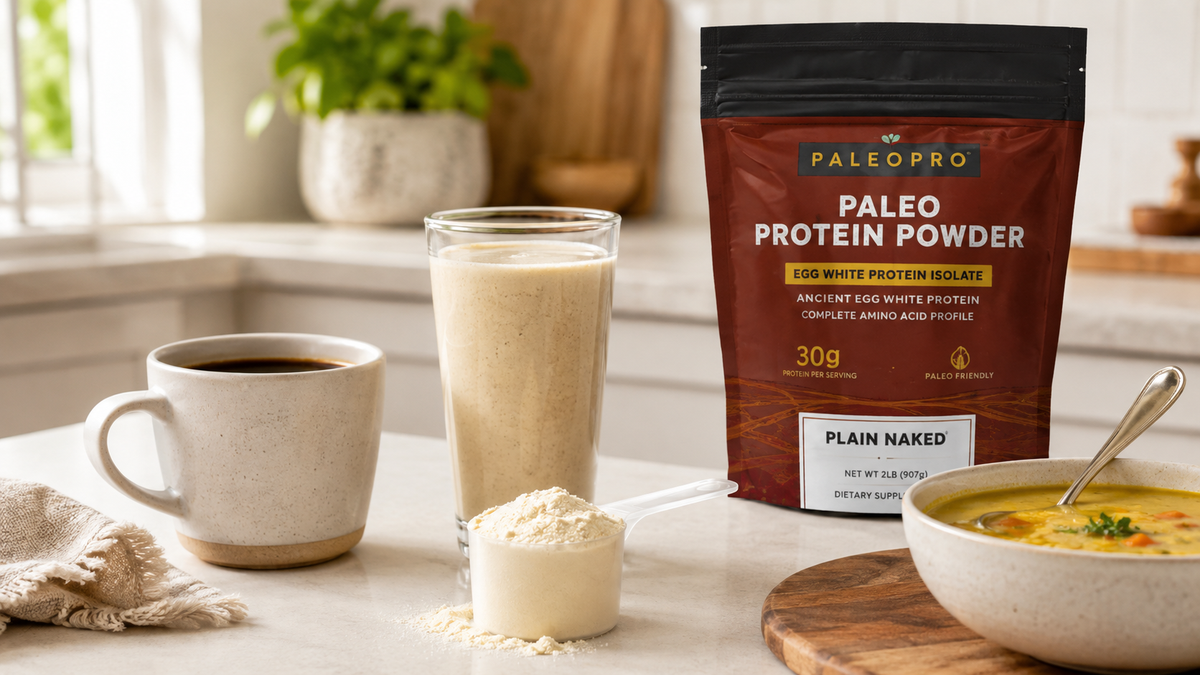
Unflavored protein powder is protein sold without added flavoring, but it is not tasteless. Whey tastes faintly milky, beef and egg blends lean savory, and pea protein is earthy. The best unflavored protein powder is a complete protein you tolerate, with no sweetener and a short ingredient list where every item has a job.
That plain label is the appeal. You control the flavor, and the powder can move between a smoothie, pancake batter and a savory meal without turning everything into vanilla.
What does unflavored protein powder taste like?
It tastes like a quieter version of its raw material. Processing, concentration and the amount of liquid change how obvious that flavor is.
| Protein source | Typical flavor and texture | Label issue to check |
|---|---|---|
| Whey isolate | Light dairy note; usually thin | Milk allergen; lactose varies by product |
| Beef protein isolate | Mildly savory or brothy | Source and amino acid profile |
| Egg white protein | Neutral to slightly eggy; can foam | Egg allergen |
| Pea or rice blend | Earthy and often thicker | Blend quality and total protein |
| Collagen peptides | Usually mild and easy to mix | Incomplete protein |
No table can tell you what your own palate will notice. Water exposes every flavor. A smoothie with fruit or cocoa covers much more. Savory food can make a mild beef note feel intentional.
Texture belongs in the decision too. Powders vary in particle size and processing, while gums or lecithin change how they disperse. A short ingredient list helps you see what you are buying, but it does not guarantee a silky shake.
For a powder meant to disappear into recipes, choose the complete protein you tolerate and judge the ingredient list before the front label.

Plain Naked delivers 26g of complete protein from beef isolate and egg white in a three-ingredient formula.
Is there a truly tasteless protein powder?
No. Every protein powder tastes like something, because protein is food. "Tasteless" and "flavorless" are shorthand for mild enough to disappear once it is mixed into something else.
Three things decide how invisible a plain powder gets:
- The source. Collagen peptides and egg white tend to be the mildest in water. Whey carries a dairy note, beef isolate a light savory one, and pea an earthy one.
- The dose and the liquid. A scoop in 8 ounces of water is a taste test. The same scoop in a smoothie, oatmeal, or soup is an ingredient.
- The rest of the formula. Salt, lecithin, and enzymes change taste and texture a little. A plain powder with no flavor system is easier to hide than one with a "natural flavor" meant to cover something.
If you want a powder nobody at the table can detect, plan to cook or blend with it. If you want one that is pleasant in plain water, buy a flavored powder and skip the heroics.
Is unflavored the same as unsweetened?
Treat them as separate label clues. "Unsweetened" tells you there is no added sweetener. It does not tell you whether the formula contains natural flavor. "Unflavored" may still include an emulsifier, salt or another functional ingredient.
Read the full ingredient statement. FDA labeling guidance requires ingredients to be declared by their common or usual names, subject to limited exceptions, and major allergens must be identified [1,2]. That makes the back panel more useful than the big word on the front.
Three quick checks do most of the work:
- Does the ingredient list include a flavor or sweetener?
- Does the allergen statement identify milk, egg or soy?
- How many grams of protein come from the stated serving size?
A powder can be a good product with more than one ingredient. Lecithin, for example, helps a powder disperse. The useful question is whether every ingredient has a job you want. If sweeteners are the real concern, our guide to protein powder without artificial sweeteners covers unsweetened options by label name.
What is the best unflavored protein powder?
The best unflavored protein powder is the one that passes four checks: complete protein, no sweetener, an ingredient list you can explain line by line, and an allergen profile that fits you. Protein source decides the taste; the label decides everything else.
| Check | What a good unflavored powder shows | PaleoPro Plain Naked, for reference |
|---|---|---|
| Ingredient count | One to three ingredients, each with a stated purpose | 3: beef protein isolate, egg white protein, sunflower lecithin |
| Sweetener | None listed | None |
| Dairy | Depends on the source: whey and casein are milk; beef, egg, and plant proteins are not | Dairy-free; contains egg |
| Protein per scoop | Grams of protein close to the scoop weight, which signals little filler | 26g protein per 30g scoop |
| Protein quality | Complete protein, or a blend that makes one | Complete (beef plus egg white) |
We make Plain Naked, so treat that column as a worked example rather than a verdict. Run the same four checks on any bag you are considering. If you specifically want an unflavored beef powder, our beef protein powder comparison scores seven brands, including one-ingredient options.
Then match the powder to the job.
| Your main use | Useful criteria | Likely fit |
|---|---|---|
| Add complete protein to meals | All nine essential amino acids; 20g or more per serving | Whey, beef and egg blend, or a balanced plant blend |
| Avoid dairy | No milk ingredients; check shared-facility statement if needed | Beef, egg or plant protein |
| Cook savory food | Mild base flavor; no sweetener or added flavor | Unflavored beef, egg or neutral plant blend |
| Add collagen-rich amino acids | Hydrolyzed collagen with a stated dose | Collagen peptides, with a complete protein elsewhere |
| Keep ingredients minimal | Every ingredient identified and useful | Varies by formula |
Protein quality matters if the powder is meant to cover a meaningful share of your daily intake. Egg is a complete protein, and cooked egg protein was highly digestible in a human tracer study [3]. The guide to egg white protein covers that source in more detail. Whey is complete as well. Collagen has plenty of glycine and proline, but it lacks tryptophan and should not be treated as a complete protein substitute [4].
Plant powders require more label reading because a blend may combine sources to improve the amino acid profile. "Plant-based" alone tells you very little.
How do you use unflavored protein powder in food?
Use less than you think at first. A full scoop can change moisture, texture and browning.
Smoothies
Add liquid first, followed by the powder and then the other ingredients. Cocoa, nut butter, berries and banana all cover a neutral base. This is the easiest place to start because the blender handles dispersion. Our dairy-free protein shake recipes include two built around a plain powder.
Oatmeal and yogurt
Stir the powder into a small amount of cool liquid before adding it. For oatmeal, remove the pan from direct heat first. Add more liquid as needed because protein powder thickens the bowl.
Soup and sauces
Whisk a small amount into cool stock, then stir it into the finished dish off the heat. Boiling a protein-enriched sauce can make it grainy. An unflavored powder with a mild savory note usually fits better here than one made to taste sweet.
Pancakes, muffins and bars
Protein powder absorbs water differently from flour. Replace a modest portion of the flour, then adjust the liquid. A one-for-one swap often produces a dry, rubbery result.
Plain water
This is the least forgiving use. If you want a shake that tastes good with water alone, a flavored powder may be the more sensible purchase. There is no medal for drinking beige punishment.
Can you use unflavored protein powder in coffee?
Yes, though technique matters more than the word "unflavored." Mix the powder with a few tablespoons of cool water or milk until smooth, then add coffee gradually. Heat can denature and aggregate protein, especially at high concentration [5].
For a full method, use the dedicated guide to protein powder in coffee.
What should allergy-sensitive buyers know?
Unflavored does not mean allergen-free. Whey comes from milk. Egg white protein contains egg. Some plant powders contain soy, and lecithin may come from soy or sunflower.
PaleoPro Plain Naked, for example, contains three ingredients: beef protein isolate, egg white protein and sunflower lecithin. It is dairy-free, but it is not egg-free. Anyone with a diagnosed food allergy should use the allergen statement and manufacturer guidance, not a front-label shortcut.
If avoiding milk is the main decision, compare the broader options in the dairy-free protein powder guide.
If a powder causes persistent digestive symptoms, stop using it and discuss the pattern with a clinician. Switching protein sources may solve a tolerance issue, but symptoms do not identify the cause by themselves.
If you want a complete, dairy-free plain powder, Paleo Protein Powder in Plain Naked provides 26 grams of protein from beef protein isolate and egg white protein. It contains egg, and the three-ingredient formula includes sunflower lecithin for mixing. You can compare it with other formats in the protein collection.
Frequently asked questions
Does unflavored protein powder taste bad?
It should taste like a mild version of its protein source. Whether that tastes bad depends on the source, formula and what you mix it with. Plain water reveals more flavor than a smoothie or cooked dish.
Does unflavored protein powder contain sweetener?
Usually it does not, but the ingredient statement is the final check. "Unsweetened" and "unflavored" are different claims, and a product may contain functional ingredients even when no flavor is added.
Is unflavored protein powder better for you?
It is useful when you want to avoid a flavor system or control the recipe yourself. It is not automatically more nutritious. Compare protein quality, protein per serving, allergens and the complete ingredient list.
Is unflavored protein powder good for cooking?
Yes. It works in smoothies, oatmeal and many savory dishes. Add it gradually and avoid boiling protein-thickened liquids. In baking, replace only part of the flour until you know how the powder behaves.
Can you put unflavored protein powder in coffee?
Yes. Make a slurry with cool liquid first, then add the coffee gradually. The method reduces dry pockets and heat-driven clumping.
Is unflavored protein powder dairy-free?
Only if its protein source and other ingredients contain no milk. Whey and casein are dairy proteins. Beef, egg and many plant proteins are dairy-free, but you still need to check the allergen statement.
What is the most tasteless protein powder?
No protein powder is truly tasteless. Collagen peptides and egg white are usually the mildest in plain water, but collagen is not a complete protein. For a complete protein that disappears into food, a plain beef-and-egg, egg white, or whey isolate powder mixed into a smoothie or recipe is the practical answer.
Which unflavored protein powder is best for baking?
A plain powder with no sweetener works best because you control the sugar and flavor. Egg white protein adds structure. Replace only part of the flour, add liquid gradually, and expect protein powder to brown and dry out faster than flour does.
Can you use unflavored protein powder every day?
Many people use it daily to help meet a protein target. Total intake should fit your body size, diet, activity and medical needs. People with kidney disease or another condition affecting protein intake should ask their clinician for an individual target.
Sources
- U.S. Food and Drug Administration. Food Labeling Guide. FDA
- U.S. Food and Drug Administration. "Questions and Answers Regarding Food Allergens, Including the Food Allergen Labeling Requirements." FDA guidance
- Evenepoel, P., et al. (1998). "Digestibility of cooked and raw egg protein in humans as assessed by stable isotope techniques." Journal of Nutrition, 128(10), 1716-1722. PubMed
- Hoffman, J.R. & Falvo, M.J. (2004). "Protein -- Which Is Best?" Journal of Sports Science & Medicine, 3(3), 118-130. PMC
- Kelly, G.M., et al. (2018). "Pilot-scale formation of whey protein aggregates determine the stability of heat-treated whey protein solutions." Journal of Dairy Science, 101(11), 9673-9684. PubMed
