Bovine Collagen: Sources, Types, and How to Choose
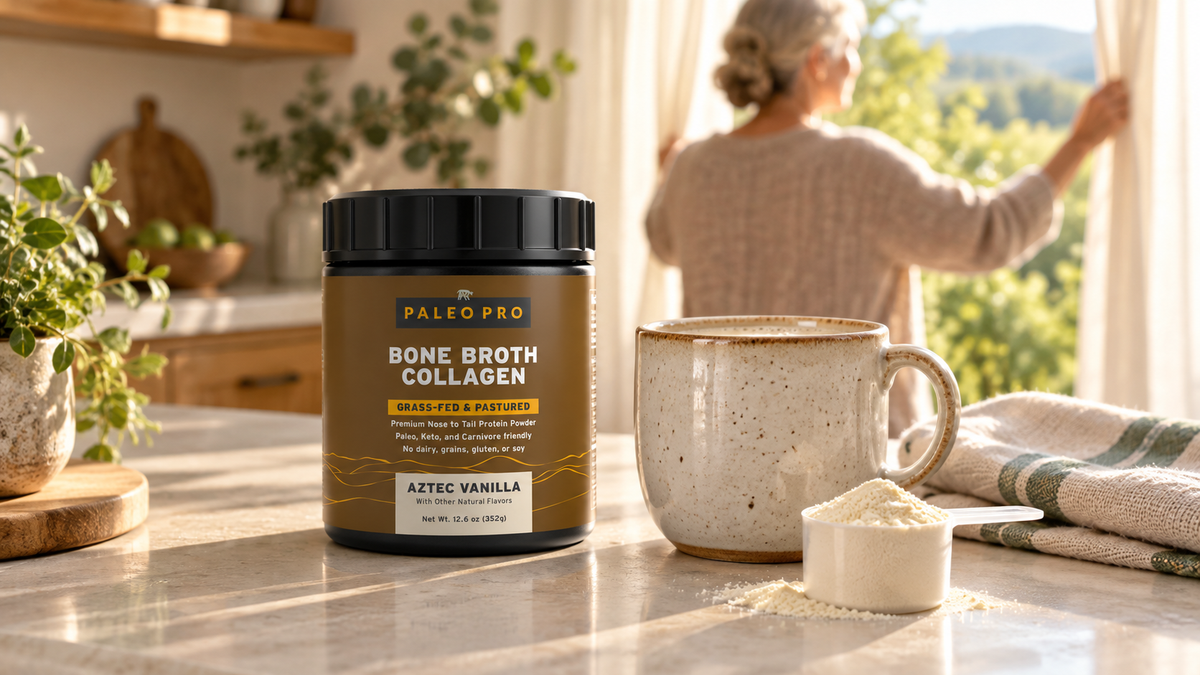
Bovine collagen is collagen sourced from cattle tissues such as hide, bone, or connective tissue. It may be sold as gelatin, hydrolyzed collagen peptides, or a bone-broth collagen powder. “Beef collagen” usually means the same source family. “Grass-fed” describes cattle sourcing; it does not identify collagen type, peptide size, dose, or clinical effectiveness.
The label can say bovine, beef, or grass-fed and still leave you wondering what is actually in the scoop. Here is how to tell those claims apart.
What is bovine collagen made from?
Bovine collagen begins with collagen-rich cattle tissue. Manufacturers clean and process the material, extract the collagen, and may hydrolyze it into smaller peptides. The finished ingredient can come from hide, bones, cartilage, or mixed connective tissues.
The source matters for traceability, allergens, dietary preferences, and the likely collagen profile of the starting tissue. It does not prove what amount of each collagen type survives in a finished blend.
| Label term | What it tells you | What it does not tell you |
|---|---|---|
| Bovine collagen | The source animal is cattle | Tissue, type, dose, peptide size, outcome |
| Beef collagen | Common consumer wording for cattle-derived collagen | Whether it comes from hide, bone, or broth |
| Grass-fed collagen | A sourcing claim about cattle management | Greater absorption or superior clinical effect |
| Hydrolyzed collagen | The protein was broken into smaller peptides | Exact molecular-weight range or benefit |
| Gelatin | Collagen has been denatured and can gel | A standardized research dose |
| Bone-broth collagen | A category or product-positioning term | Whether the ingredient is dehydrated broth, beef collagen, or a blend |
Read the ingredient statement before relying on the product name. Paleo Pro's existing buying guide explains why bone broth collagen powders are not all the same.
Which collagen types come from cattle?
Cattle tissues are commonly associated with Types I and III collagen. Cartilage can also contain Type II and other collagens. That biological fact does not mean every bovine powder contains a measured, clinically meaningful amount of each type.
Type I is abundant in skin, bone, and tendon. Type III often appears alongside Type I in skin and flexible connective tissues. Type II is central to cartilage. The body has 28 collagen types, each defined by structure and biological role [1].
Supplement labels often compress this biology into “Types I and III” or “Types I, II, and III.” Unless the manufacturer provides a validated analysis, treat that as a source description rather than a dose statement.
Our collagen types explained guide separates type, source, hydrolysis, and undenatured Type II in more detail.
What is hydrolyzed bovine collagen?
Hydrolysis breaks collagen into smaller protein fragments called peptides. It changes solubility and reduces the gelling behavior associated with gelatin.
A small human study detected hydroxyproline-containing peptides in blood after volunteers consumed gelatin hydrolysates from several animal sources [2]. That supports absorption of some collagen-derived peptides. It does not show that bovine peptides are universally absorbed better than marine, chicken, or porcine peptides.
Peptide size depends on manufacturing. “Hydrolyzed” alone does not disclose a molecular-weight distribution. It also does not establish that the product was used in a clinical trial.
Is grass-fed bovine collagen better?
Grass-fed sourcing can matter to someone choosing how cattle were raised or evaluating supply-chain standards. It is not a clinical outcome.
A grass-fed claim does not establish:
- More collagen per scoop
- A different indispensable amino-acid pattern
- Better absorption
- More Type II collagen
- Improved skin or joint results
- Lower contaminant levels
Those questions require product-specific measurement or human comparison. If a brand makes a purity or contaminant claim, look for a recent test tied to the actual product or lot.
“Grass-fed” can be a valid preference. Keep the promise attached to sourcing.
Is bovine hide collagen different from bovine bone collagen?
The starting tissue differs, but both ingredients can become hydrolyzed collagen peptides. Hide is commonly associated with Types I and III. Bone and cartilage begin with a broader tissue mix, yet the finished label may still list only beef collagen or hydrolyzed bovine collagen.
That is why “bone” on the front does not prove a measured amount of Type II collagen, minerals, glucosamine, or chondroitin in the serving. Those components would need their own product-specific measurement. Likewise, a hide-derived powder is not automatically purer or more absorbable.
If the distinction matters, ask the manufacturer for the source tissue, finished ingredient specification, and any type or molecular-weight analysis behind the claim. A photograph of cattle and a list of collagen types are not the same evidence.
How does bovine collagen compare with marine collagen?
The largest obvious difference is source. Marine collagen commonly comes from fish skin or scales and is mainly associated with Type I collagen. Bovine collagen commonly comes from cattle hide or other connective tissues and is associated with Types I and III.
Neither source earns a universal absorption advantage. Hydrolysis and peptide-size distribution can matter, and direct human head-to-head trials on finished products are limited. Fish-derived ingredients also matter for allergen screening.
Choose marine or bovine collagen based on source preference, allergen needs, label transparency, and evidence for the exact ingredient. A broad species claim is not a clinical comparison.
What benefits have been studied?
Human collagen research covers different source materials and outcomes. Results do not automatically travel between them.
Joints
A 2024 meta-analysis of 35 randomized trials found small-to-moderate improvements in osteoarthritis pain and function across collagen derivatives [3]. The trials included varied materials. This supports cautious discussion of some collagen interventions, not a claim that bovine collagen as a category treats joint disease.
Skin
A 2025 meta-analysis found overall pooled improvements, but the effects disappeared in higher-quality trials and trials without pharmaceutical-company funding [4]. A bovine source label does not resolve those limitations.
Bone
A randomized trial in postmenopausal women with reduced bone density found improvements after 12 months with 5 grams daily of specific collagen peptides [5]. The material, dose, population, and duration matter. Generic bovine collagen was not the tested intervention. The study was partly funded by collagen manufacturer GELITA AG, which matters when weighing the result.
Digestion
Human evidence does not establish that bovine collagen heals the gut. Amino-acid mechanisms and tissue biology do not replace trials of digestive outcomes.
The correct question is always “Which ingredient, at what dose, for which outcome?”
Is bovine collagen a complete protein?
No. Collagen contains protein and contributes grams on a label, but it lacks tryptophan and has low amounts of several indispensable amino acids. Its protein-quality score is therefore very low when evaluated alone [6].
That does not make collagen useless. It means collagen and complete protein serve different nutritional roles. Use meat, eggs, dairy, soy, or another verified complete source for general protein adequacy. Treat collagen as a specialized protein ingredient rather than the foundation of a meal.
The separate guide does collagen count as protein? explains how label grams and protein quality fit together.
How do you choose a bovine collagen supplement?
Use a label-first checklist.
- Source tissue: Does the brand say hide, bone, broth, or connective tissue?
- Form: Is it gelatin, hydrolyzed peptides, or undenatured material?
- Protein amount: How many grams are in the serving?
- Blend detail: Are multiple collagen sources combined, and are amounts disclosed?
- Other ingredients: Flavors, sweeteners, botanicals, and emulsifiers belong in the decision.
- Allergens: Check the full formula, especially multi-source blends containing fish or egg-derived materials.
- Testing: Look for product- or lot-specific evidence rather than a generic quality badge.
- Clinical match: Compare the exact ingredient and dose with the research for your goal.
Paleo Pro's Grass-Fed Bone Broth Collagen + Turmeric currently lists beef collagen as its protein source, with 16 grams of protein per serving plus natural flavors, monk fruit, and turmeric root [7]. That is a bovine collagen formula. Its label does not establish a quantified amount of each collagen type or a guaranteed clinical outcome.
Compare it with other current formats in the collagen collection.
Who should avoid bovine collagen?
Avoid it if cattle-derived ingredients conflict with an allergy, religious practice, ethical preference, or prescribed diet. People with a history of food reactions should read the entire ingredient and allergen statement as well as the collagen source.
Speak with a qualified clinician before using a supplement for osteoarthritis, osteoporosis, persistent digestive symptoms, pregnancy, nursing, or in place of prescribed care. A supplement label is not a diagnosis.
Frequently asked questions
Is bovine collagen the same as beef collagen?
Usually. Both terms refer to collagen sourced from cattle. The ingredient statement should clarify whether the material comes from hide, bone, broth, or another tissue.
Is bovine collagen made from cows?
Yes. Bovine means cattle-derived. The source tissue and manufacturing process vary by ingredient and should be disclosed by the manufacturer.
What collagen types are in bovine collagen?
Bovine tissues are commonly associated with Types I and III, while cartilage can include Type II. A finished powder may not quantify each type.
Is grass-fed collagen more effective?
Human evidence has not established that grass-fed sourcing makes collagen more absorbable or clinically effective. It is primarily a sourcing attribute.
Is bovine collagen better than marine collagen?
Neither is universally better. Compare source preference, fish allergens, hydrolysis, protein amount, formula transparency, and evidence for the exact ingredient.
Does bovine collagen count as protein?
It contributes protein grams, but it is incomplete and should not replace balanced complete proteins for primary protein needs.
Can bovine collagen heal the gut?
No strong human evidence supports a gut-healing claim. Treat mechanistic explanations as hypotheses unless a human trial tests the relevant ingredient and outcome.
Bovine collagen is a source category, not a clinical result. The useful label tells you the tissue, form, serving, full formula, and evidence behind the claim.
Choose the source deliberately, then judge the measured serving and the evidence.
Sources
- Ricard-Blum S. “The Collagen Family.” Cold Spring Harbor Perspectives in Biology. 2011;3(1):a004978. doi:10.1101/cshperspect.a004978
- Iwai K, et al. “Identification of Food-Derived Collagen Peptides in Human Blood After Oral Ingestion of Gelatin Hydrolysates.” Journal of Agricultural and Food Chemistry. 2005;53(16):6531-6536. doi:10.1021/jf050206p
- Liang CW, et al. “Efficacy and Safety of Collagen Derivatives for Osteoarthritis: A Trial Sequential Meta-Analysis.” Osteoarthritis and Cartilage. 2024;32(5):574-584. PMID: 38218227
- Myung SK, Park Y. “Effects of Collagen Supplements on Skin Aging: A Systematic Review and Meta-Analysis of Randomized Controlled Trials.” The American Journal of Medicine. 2025;138(9):1264-1277. doi:10.1016/j.amjmed.2025.04.034
- König D, et al. “Specific Collagen Peptides Improve Bone Mineral Density and Bone Markers in Postmenopausal Women.” Nutrients. 2018;10(1):97. PMID: 29337906
- Phillips SM. “Current Concepts and Unresolved Questions in Dietary Protein Requirements and Supplements in Adults.” Frontiers in Nutrition. 2017;4:13. doi:10.3389/fnut.2017.00013
- Paleo Pro. “Grass-Fed Bone Broth Collagen + Turmeric.” Product page and current product data, accessed 2026-09-17. Product details
