How to Make Collagen-Rich Bone Broth (or Skip the 24-Hour Simmer)
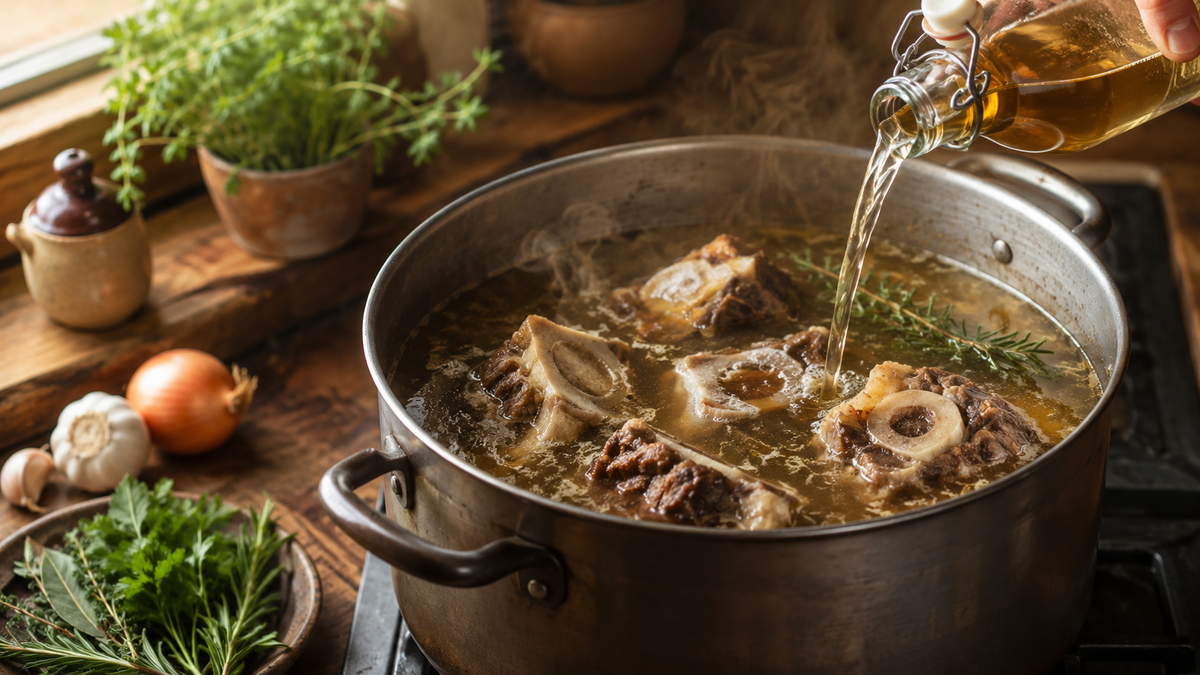
To make collagen-rich bone broth, start with collagen-dense bones — knuckles, marrow bones, oxtail, or feet — add a splash of vinegar, cover with water, and simmer low and slow for 12 to 24 hours. The vinegar and long, gentle heat pull the collagen out of the bones and into the broth. You'll know it worked when it sets into a firm gel in the fridge.
That's the whole secret, and it's mostly about patience. Here's how to do it well — and an honest shortcut for the days you don't have 24 hours to babysit a stockpot.

16g of grass-fed collagen per scoop in seconds — the collagen-rich broth payoff without the 24-hour simmer or the guesswork.
What actually makes bone broth collagen-rich?
Four levers, and most recipes only mention one or two:
- The bones. Collagen lives in connective tissue, cartilage, and joints — so knuckles, feet, oxtail, and marrow bones give you far more than a lean soup bone or a picked-over carcass. This is the single biggest factor.
- An acid. A couple of tablespoons of apple cider vinegar in the water helps break down the bone matrix so more collagen releases. Let it sit cold for 20–30 minutes before heating.
- Low, slow heat. A gentle simmer — not a rolling boil — over many hours is what converts collagen into dissolved gelatin. A hard boil can leave you with a cloudy, less-gelled broth.
- Time. Beef bones want 18–24 hours; chicken, 12–18. Short-cut it and you leave collagen in the bones.
Get all four right and you're rewarded with a broth that sets like Jell-O when it cools. That wobble is the collagen — the visible proof you extracted a lot of it. The one thing the pot still won't tell you is the exact number of grams, because even a perfect batch varies. Which is worth knowing before you build a daily habit around it.
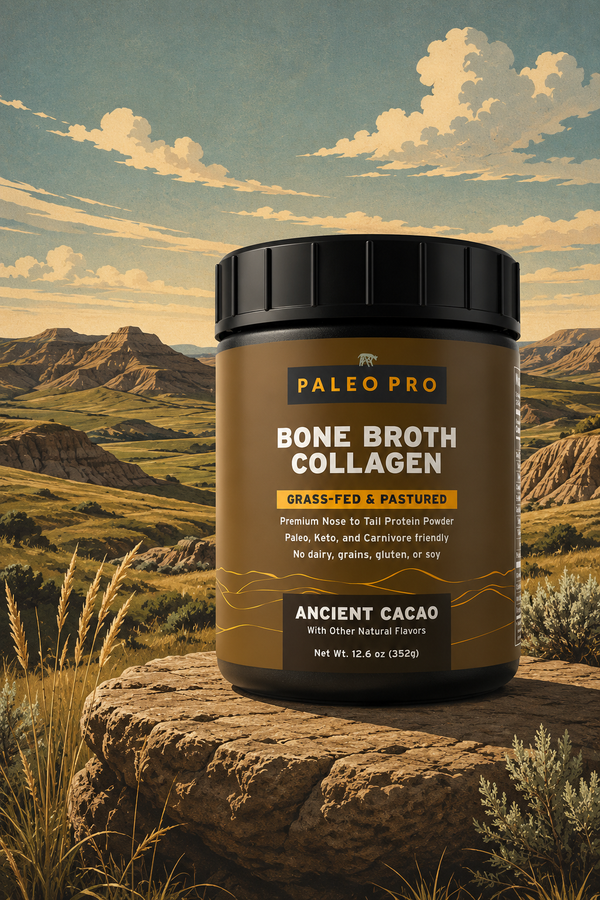
16g of grass-fed collagen per scoop in seconds — the collagen-rich broth payoff without the 24-hour simmer or the guesswork.
Step-by-step: how to make collagen-rich bone broth
Here's a reliable beef version. Scale as needed.
You'll need:
- 3–4 lbs collagen-rich beef bones (knuckle, marrow, oxtail, or feet — ask your butcher for "soup bones" or "joint bones")
- 2 tbsp apple cider vinegar
- 1 onion, 2 carrots, 2 celery stalks (optional, for flavor)
- Water to cover (about 1 gallon)
- Salt to taste
Method:
- Roast the bones at 400°F for 30–40 minutes. This is optional but deepens the flavor considerably.
- Add bones, vinegar, and cold water to a large stockpot or slow cooker. Let it sit 20–30 minutes before heating — the acid starts working on the bones.
- Bring to a bare simmer, never a rolling boil. Skim off any foam that rises in the first hour.
- Add the vegetables in the last few hours so they don't turn bitter.
- Simmer low for 18–24 hours (beef) or 12–18 hours (chicken). Top up with water if the bones become exposed.
- Strain through a fine mesh sieve and discard the solids.
- Cool, then refrigerate. The fat will rise and solidify — skim it or leave it.
Yield is roughly 3–4 quarts. It keeps 4–5 days in the fridge and months in the freezer.
How do you know if your bone broth has collagen?
Chill it and look. If it sets into a firm, jiggly gel, congratulations — you pulled out a lot of collagen. If it stays liquid, your batch was collagen-poor, usually because the bones weren't collagen-dense enough or the simmer was too short. Reheating the gelled broth turns it back to liquid; the gel is just what collagen does when it's cold and concentrated.
Two honest caveats worth knowing. First, the gel test is qualitative — it tells you "a lot" or "a little," never the exact grams, and even great batches vary [1]. Second, use quality bones. Bones can concentrate lead and other metals from the animal's environment, and one analysis found measurable lead in broth made from conventionally raised bones [2]. It's not a reason to fear broth, but it is a reason to choose grass-fed, well-sourced bones — the same standard you'd want in any beef.
How to store and use collagen-rich bone broth
Sip it warm with a little salt, use it as a base for soups and braises, or cook grains and vegetables in it to fold the collagen into a meal. Freeze it in jars or silicone molds for single servings. A mug in the morning or evening is the simplest habit — the glycine in collagen has even been linked to better sleep quality when taken before bed [3].
If your morning mug lands inside a fasting window, check whether bone broth breaks a fast first; the answer depends on why you are fasting.
The shortcut: collagen-rich bone broth without the 24-hour simmer
Some days you're not going to source knuckle bones and babysit a pot for a full day. That's exactly what a standardized bone broth collagen powder is for. You get the collagen — measured to the same dose every time — in a scoop that mixes into hot water in seconds. No butcher trip, no skimming, no guessing whether today's batch gelled.
It's the honest trade: homemade broth is a wonderful ritual and gives you extras a powder can't, but it costs a day and never promises a dose. A grass-fed bone broth collagen costs ten seconds and delivers a consistent 16 grams every time. Plenty of people do both — simmer a batch when they have the weekend, and keep a tub on hand for the other six mornings. Especially handy if you're short on time, managing appetite on a GLP-1 medication, or just want a warm, savory way to get protein in.
Bone broth and collagen: key numbers
- Homemade beef stock: about 4.7g of protein, 31 calories and 475 mg of sodium per cup (USDA FoodData Central, FDC 172883).
- Store-bought broth: 7 to 10g of protein per 8 oz serving across the branded USDA label records we checked (FDC 2149645, 2428179, 2669477, 1954906).
- Collagen building blocks: glycine, proline and hydroxyproline made up about 40% of the amino acids measured in commercial beef broths. That's our arithmetic on the table in Shaw and Flynn (2019), a small study of 15 store samples.
- Consistency: homemade broth delivered lower and more variable amounts of collagen building blocks than a 20g collagen supplement dose, and the spread came from different recipes, not from batches of the same recipe (Alcock et al., 2019, PMID 29893587).
- Bone Broth Collagen + Turmeric: 16g of protein, all beef collagen, in an 18g scoop with 70 calories. Source: the product label, checked 2026-10-22.
Per serving, side by side:
| Option | Serving | Calories | Protein | Sodium | Source |
|---|---|---|---|---|---|
| Home-made beef stock | 1 cup (240g) | 31 | 4.7g | 475 mg | USDA FDC 172883 |
| Store-bought bone broth (range) | 8 oz | 36 to 79 | 7 to 10g | 240 to 701 mg | USDA branded label records |
| Bone Broth Collagen + Turmeric | 1 scoop (18g) | 70 | 16g | 110 mg | Label, checked 2026-10-22 |
Counting broth toward your daily protein? Read this first
Collagen is a useful protein and an incomplete one. It has no tryptophan, so it can't stand in for a complete protein at a meal (Paul et al., 2019, PMID 31096622; the authors provide research services to a collagen maker). In a trial in women around 69, 30g of whey twice a day raised muscle protein synthesis, while the same dose of collagen peptides did not, apart from a short-lived bump in the exercised leg (Oikawa et al., 2020, PMID 31919527).
So let broth and collagen do what they're good at, and get the protein at each meal from complete sources: meat, eggs, fish, or a complete powder like Paleo Protein at 26g per scoop. A mug of broth next to breakfast is a fine habit. Keep the eggs on the plate too. If you'd rather skip the simmer on weekdays, Bone Broth Collagen + Turmeric gives you a known 16g every time. For the bigger picture, see our collagen and bone broth guide, the evidence on whether bone broth has collagen, and how a bone broth protein powder differs from a collagen scoop.
Frequently asked questions
How do you make bone broth high in collagen? Use collagen-dense bones (knuckle, marrow, oxtail, feet), add a splash of vinegar, cover with water, and simmer low — not boiling — for 18–24 hours for beef or 12–18 for chicken. Strain and chill; a firm gel means it's collagen-rich.
Does adding vinegar to bone broth increase collagen? It helps. A couple of tablespoons of an acid like apple cider vinegar helps break down the bone matrix so more collagen releases into the water. Let the bones and vinegar sit in cold water for 20–30 minutes before heating.
How long do you simmer bone broth for maximum collagen? Beef bones want about 18–24 hours; chicken, 12–18. Collagen needs time and gentle heat to convert to dissolved gelatin. A short simmer leaves collagen locked in the bones.
Why didn't my bone broth gel? Usually the bones weren't collagen-dense enough (a lean carcass instead of joints and feet), the ratio was too watery, or the simmer was too short or too hot. Gel comes from collagen — no collagen extracted, no gel.
Is homemade bone broth as good as collagen powder? It has extras a powder doesn't (minerals, a savory format) but a big weakness: an inconsistent, unmeasured dose [1]. A standardized bone broth collagen powder trades the whole-food extras for a reliable, exact amount and a ten-second prep. Many people use both.
Can you make bone broth in a slow cooker or Instant Pot? Yes. A slow cooker on low is ideal for the long, gentle simmer. A pressure cooker speeds things up — about 2–3 hours under pressure — though many cooks feel a long stovetop or slow-cooker simmer gels best.
Making collagen-rich bone broth isn't hard — it's just slow, and it comes down to good bones, a splash of acid, and time. Do it when you can; it's a genuinely nourishing ritual. And on the days you can't, there's no shame in a scoop that gets you the same collagen without the wait.
Love the broth, hate the 24-hour wait? Grass-Fed Bone Broth Collagen + Turmeric gives you 16g of grass-fed collagen per scoop in seconds — four clean ingredients, monk-fruit sweetened, hot or cold, with a 60-day money-back guarantee.
How much collagen is in bone broth? Nobody can give you one number for a homemade pot. Collagen yield depends on the bones, the acid and the simmer, and a 2019 analysis found homemade broth delivered lower and less predictable collagen building blocks than a supplement dose (Alcock et al., 2019). USDA lists home-prepared beef stock at about 4.7g of total protein per cup, and not all of that protein is collagen (FDC 172883).
How do you extract collagen from beef bones? Use joint-heavy bones such as knuckles, oxtail and feet. Soak them in cold water with a couple of tablespoons of vinegar for 20 to 30 minutes, then hold the pot at a bare simmer for 18 to 24 hours. Heat and time turn the collagen into dissolved gelatin, and if the strained broth sets into a gel in the fridge, you pulled out a good amount.
Can you add collagen powder to homemade bone broth? Yes. Stir an unflavored collagen powder into hot broth after it comes off the heat and it dissolves in seconds, which gives a batch of unknown strength a known dose. A sweetened, flavored collagen like our vanilla or cacao Bone Broth Collagen belongs in coffee or a shake instead, unless you like your soup sweet.
Sources
- Alcock, R.D., Shaw, G.C., & Burke, L.M. (2019). "Bone Broth Unlikely to Provide Reliable Concentrations of Collagen Precursors Compared With Supplemental Sources of Collagen Used in Collagen Research." International Journal of Sport Nutrition and Exercise Metabolism, 29(3), 265–272. PMID: 29893587
- Monro, J.A., Leon, R., & Puri, B.K. (2013). "The risk of lead contamination in bone broth diets." Medical Hypotheses, 80(4), 389–390. PMID: 23375414
- Yamadera, W., et al. (2007). "Glycine ingestion improves subjective sleep quality in human volunteers, correlating with polysomnographic changes." Sleep and Biological Rhythms, 5(2), 126–131.
