Best Bone Broth Collagen Powders (2026): What to Actually Look For
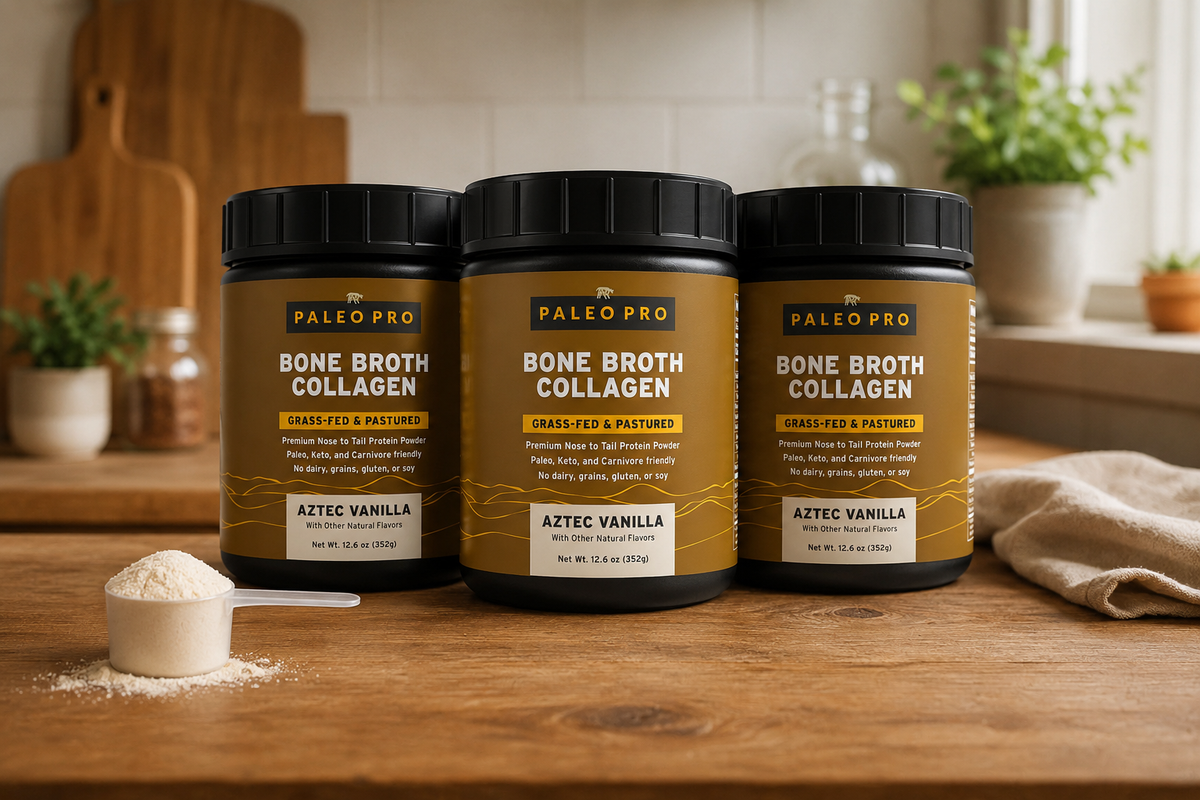
The best bone broth collagen powder states its collagen source, gives you a measured dose, lists every added ingredient and fits the way you will use it. First decide whether you want whole bone broth, dehydrated broth or hydrolyzed beef collagen marketed as bone broth collagen. Those products share a category name, but they are not the same thing.
That distinction matters more than another roundup of tubs. A label can help you buy the format you wanted, while a brand name cannot.

16g of protein from grass-fed beef collagen, with turmeric root in a four-ingredient formula.
What should you look for in a bone broth collagen powder?
Use five checks.
| Check | What the label should tell you | Why it matters |
|---|---|---|
| Protein source | Beef collagen, chicken collagen or dehydrated broth | Identifies what is actually in the scoop |
| Dose | Grams of collagen or protein per serving | Lets you compare unlike scoop sizes |
| Added ingredients | Flavor, sweetener, spice, gums or carriers | Shows what changes taste and texture |
| Format | Hydrolyzed collagen, gelatin or whole-broth powder | Predicts how it mixes and how it can be used |
| Allergens | Milk, egg, fish, shellfish, soy or other declared allergens | Helps you rule products in or out safely |
Price per container hides the useful number. Calculate cost per 10 grams of collagen or per serving at the dose you plan to use. Then decide whether sourcing, flavor and convenience earn the difference.
A short label is easy to audit. It is not automatically superior. An extra ingredient should have a clear purpose, and its amount should be disclosed when the quantity matters.
For a measured collagen format, the useful target is a stated beef-collagen dose with a formula you will drink consistently.
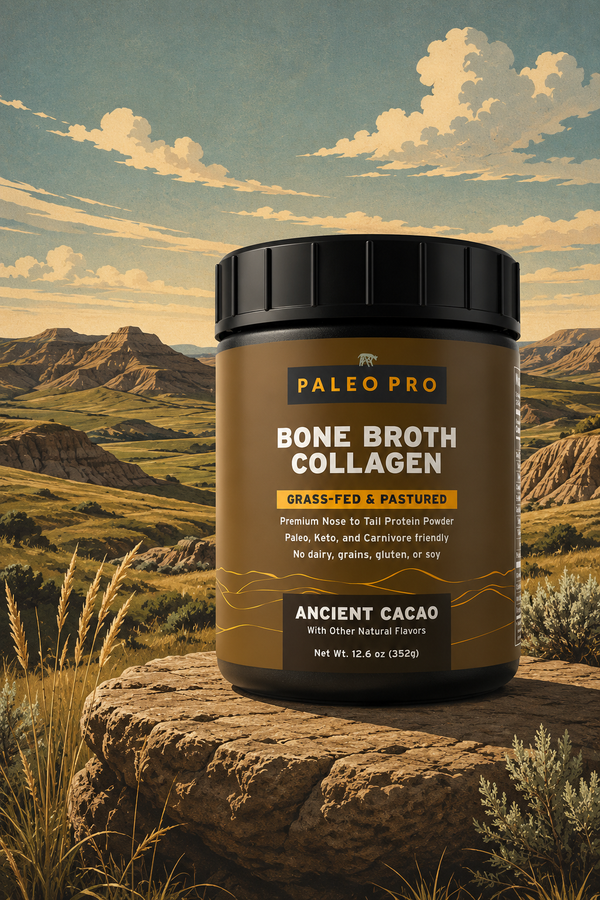
16g of protein from grass-fed beef collagen, with turmeric root in a four-ingredient formula.
Is bone broth collagen powder the same as bone broth?
No. Whole bone broth is made by simmering animal bones and connective tissue in water. Its protein and amino acid content varies with the raw materials, water ratio and cooking process. A study comparing homemade broths found that they did not provide consistent concentrations of collagen precursors at levels used in collagen-supplement research [1].
Dried broth sold as bone broth protein powder is its own category, and its amino acid profile is mostly collagen.
Powders fall into several formats:
- Dehydrated whole-broth powder starts with broth and removes water.
- Gelatin is collagen that forms a gel when cooled.
- Hydrolyzed collagen peptides are collagen proteins broken into smaller peptides so they disperse more readily.
- Bone broth collagen may be a marketing name for a collagen formula rather than dehydrated broth.
None of those names proves that a product contains the minerals, glucosamine or chondroitin associated with a simmered broth. If the label does not list or quantify an extra, do not mentally add it.
The guide to whether bone broth has collagen explains why homemade broth varies so much.
PaleoPro's Grass-Fed Bone Broth Collagen + Turmeric is grass-fed beef collagen with natural flavors, monk fruit extract and turmeric root. Beef collagen is the sole protein. The product is marketed as bone broth collagen; it is not a mixture of bone broth plus added collagen.
How much collagen should a powder provide?
There is no universal daily collagen requirement. Research doses vary by outcome and by the specific collagen product studied.
| Research area | Form studied | Example dose and duration | Important limit |
|---|---|---|---|
| Knee osteoarthritis symptoms | Collagen peptides | Trials commonly used gram-level daily doses | Meta-analysis found benefit, but included trials had high risk of bias [2] |
| Bone mineral density | Specific collagen peptides | 5g daily for 12 months | Postmenopausal trial was industry funded [3] |
| Skin aging | Hydrolyzed collagen products | Doses and durations varied | Higher-quality and non-industry-funded subsets showed no significant benefit [4] |
A bigger dose is not automatically better. The study form matters. Results from a branded peptide used in a trial do not transfer neatly to every collagen powder on the shelf.
For shopping, a clearly stated dose is more useful than an aggressive number. It tells you what you are taking and lets you compare cost consistently.
What does hydrolyzed collagen do in the body?
Digestion breaks collagen into amino acids and small peptides. Human research has detected collagen-derived peptides such as prolyl-hydroxyproline in blood after people consumed gelatin hydrolysate [5]. That supports a plausible mechanism: collagen supplies raw materials, and some peptides may also act as biological signals.
Plausibility is not a promise about what will happen to one person's skin or joints. Outcomes depend on the product, dose, duration, health status and study quality. Compare a product with research on the same collagen form instead of transferring results from a different formula.
If a label leads with collagen types, use the collagen types guide to separate source from function.
Collagen is also an incomplete protein. It lacks tryptophan and is low in several essential amino acids [6]. Count its grams accurately, but do not use it as the only protein source for a meal meant to support muscle.
Should you choose flavored or unflavored collagen?
Choose by use.
Unflavored collagen offers more flexibility in coffee, smoothies and recipes. It still has a base flavor, and some products use masking ingredients.
Flavored collagen is easier to turn into a stand-alone drink. Check the sweetener and serving directions because the flavor system affects the experience as much as the collagen.
Savory broth powder fits sipping and cooking. Confirm whether it is dehydrated broth or a collagen formula with savory seasoning.
Turmeric can be a flavor and formula choice. Its presence does not turn a collagen powder into a treatment, and the amount should not be assumed from the front label.
How does PaleoPro's bone broth collagen fit the checklist?
PaleoPro Grass-Fed Bone Broth Collagen + Turmeric provides 16 grams of protein from grass-fed beef collagen in a 70-calorie serving. The four ingredients are beef collagen, natural flavors, monk fruit extract and turmeric root. Each container has 20 servings.
It is a flavored, sweetened collagen drink rather than a savory whole broth. That makes it a fit for someone who wants a measured beef-collagen serving that can be mixed hot or cold. It is the wrong choice for a shopper seeking an unflavored powder or a dehydrated bowl of broth, and saying so saves both of us a return.
The product carries a 60-day money-back guarantee. Judge flavor and routine inside that window; judge health claims by the research, not the return policy.
What should you avoid when comparing collagen powders?
- A serving size that hides how many grams of collagen you receive
- A proprietary blend that makes the key ingredient impossible to compare
- Disease-treatment language or guaranteed skin and joint outcomes
- An allergen or source that does not fit your needs
- A format mismatch, such as buying sweet collagen when you wanted savory broth
Watch for category drift too. A product with complete protein plus collagen may be useful, but it answers a different question from a collagen-only powder. Compare it in the category where you will use it.
Frequently asked questions
What is the best bone broth collagen powder?
The best choice clearly states its source and dose, lists added ingredients, identifies allergens and fits your preferred use. Decide first whether you want whole-broth powder, hydrolyzed collagen or a flavored collagen drink.
Is bone broth collagen powder the same as real bone broth?
No. Real bone broth is a variable whole-food liquid. Some powders dehydrate that broth, while others are hydrolyzed collagen formulas sold in the bone broth collagen category.
How much collagen should be in a serving?
There is no official daily requirement. Studies use different doses for different outcomes, often with specific peptide formulas. Choose a product with a disclosed dose and compare it with research on the same form.
Is collagen a complete protein?
No. Collagen lacks tryptophan and is low in several essential amino acids. It can contribute protein grams, but it should not replace complete protein from food or another powder.
Can you put bone broth collagen powder in coffee?
Often, yes, if the label permits hot-liquid use. Flavor matters: a formula with turmeric, monk fruit or natural flavors will change the coffee. Follow the mixing directions and do not assume every collagen powder is tasteless.
Does collagen powder help skin and joints?
Some trials report joint or skin benefits, but study quality and industry funding complicate the evidence. The strongest recent skin review found no significant benefit in higher-quality or non-industry-funded subsets [4].
What is beef bone broth collagen made from?
It depends on the product. Some formulas are dehydrated beef broth, while others use beef collagen and market it as bone broth collagen. Read the protein source and complete ingredient list rather than assuming it contains both broth and added collagen.
The category becomes easier once you separate the label name from the product form. If a measured, flavored beef-collagen drink fits your use, Grass-Fed Bone Broth Collagen + Turmeric provides 16 grams of collagen protein per serving and is backed by a 60-day guarantee. For the category distinctions, keep the companion guide to bone broth versus collagen peptides handy, or browse the collagen collection to compare formats.
Related collagen guides
To compare cattle-derived sources, read our bovine collagen guide. For help interpreting the protein number on a collagen label, see does collagen count as protein?
Sources
- Alcock, R.D., Shaw, G.C. & Burke, L.M. (2019). "Bone Broth Unlikely to Provide Reliable Concentrations of Collagen Precursors Compared With Supplemental Sources of Collagen Used in Collagen Research." International Journal of Sport Nutrition and Exercise Metabolism, 29(3), 265-272. PubMed
- Lin, C.R., et al. (2023). "Analgesic efficacy of collagen peptide in knee osteoarthritis: a meta-analysis of randomized controlled trials." Journal of Orthopaedic Surgery and Research, 18, 694. PubMed
- König, D., et al. (2018). "Specific Collagen Peptides Improve Bone Mineral Density and Bone Markers in Postmenopausal Women." Nutrients, 10(1), 97. PubMed
- Myung, S.K. & Park, Y. (2025). "Effects of Collagen Supplements on Skin Aging: A Systematic Review and Meta-Analysis of Randomized Controlled Trials." The American Journal of Medicine, 138(9). PubMed
- Iwai, K., et al. (2005). "Identification of food-derived collagen peptides in human blood after oral ingestion of gelatin hydrolysates." Journal of Agricultural and Food Chemistry, 53(16), 6531-6536. PubMed
- Hoffman, J.R. & Falvo, M.J. (2004). "Protein -- Which Is Best?" Journal of Sports Science & Medicine, 3(3), 118-130. PMC
