Protein Powder With Collagen: How to Choose the Right One
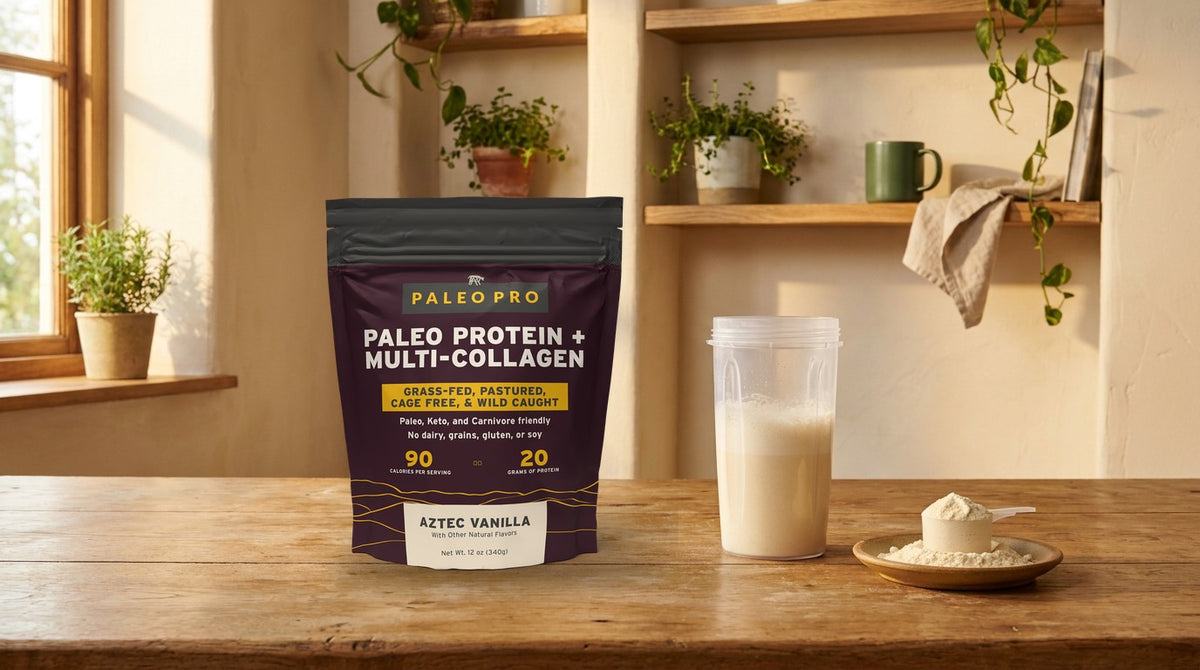
The best protein powder with collagen is built on a complete protein that delivers about 20 grams or more per scoop, with collagen added on top rather than doing the protein's job. Check the first ingredient, whether the collagen grams are disclosed, the calories per scoop, and the allergens in the collagen sources.
Protein-and-collagen powders promise two supplements in one tub. Sometimes that's exactly what you want. Sometimes it's a collagen powder wearing a protein label. The difference is on the back of the bag, and it takes about a minute to read once you know where to look.

20g of protein built on grass-fed beef isolate, plus four collagen sources, in 90 calories.
What does adding collagen to a protein powder do?
It adds a second, specialized protein to a first, general-purpose one. The complete protein does the heavy lifting for muscle and daily protein needs. The collagen brings a concentrated dose of glycine, proline and hydroxyproline, the amino acids collagen research has focused on.
The two aren't interchangeable. In a randomized trial of 22 healthy women around age 69, a 30-gram dose of whey raised muscle protein synthesis at rest and after exercise, while the same dose of collagen raised it only in the exercised leg, less than whey did, and not at all over the longer six-day measurement [1]. Collagen lacks the essential amino acid tryptophan, which is why protein-quality scoring counts it as incomplete [2]. We cover the scoring in detail in does collagen count as protein.
What collagen brings is its own research record, which is mixed. A 2024 meta-analysis of 35 trials in people with osteoarthritis found small-to-moderate improvements in pain and function [3]. For skin, a 2025 meta-analysis of 23 trials found benefits only in studies funded by industry; independently funded and high-quality trials showed no significant effect [4]. So a protein-and-collagen powder makes the most sense when you want enough complete protein first, with collagen as an extra you've decided is worth trying.
That's the case for putting both in one scoop: the protein you need every day, plus the collagen you'd otherwise buy separately.

20g of protein built on grass-fed beef isolate, plus four collagen sources, in 90 calories.
Protein + collagen blend, two scoops, or collagen alone: which fits?
A blend suits people who want one scoop and one tub. Two separate products suit people who want control over each dose. Collagen alone suits people who already get plenty of complete protein from food.
| Format | Complete protein? | Control over collagen dose | Tubs to buy | Best for |
|---|---|---|---|---|
| Protein powder with collagen added | Depends on the base protein and the proportions | Fixed by the formula, often undisclosed | 1 | One-scoop convenience when you want both |
| Complete protein powder plus a separate collagen scoop | Yes, if the protein powder is complete | Full: you choose the grams | 2 | Hitting a specific collagen amount, or using collagen on days you skip the shake |
| Collagen powder alone | No | Full | 1 | People who already eat enough complete protein and want collagen only |
| Complete protein powder alone | Yes, if verified | None | 1 | The most protein per calorie |
None of these is wrong. The mistake is buying one when you needed another, like using a collagen powder as your only protein shake because the front label says "protein."
How much collagen should a protein powder with collagen contain?
There's no official number. Human studies of collagen peptides have used roughly 2.5 to 15 grams a day, depending on the goal [2]. If the collagen in a blend is well below that range, it's there more for the label than for you.
The catch is that many blends don't say how much collagen they contain. Nutrition labels list total protein, and a blend can list its collagen sources without listing their grams. Ours is one of them, which we cover below.
The other side of the ratio matters too. A modeling study calculated that collagen peptides could supply up to 36% of the protein in a typical American diet while that diet still met essential amino acid requirements [2]. That was a whole-diet calculation, not a test of any single scoop, and one of its authors provides research services to a collagen supplement maker. Still, it points one way: collagen fits as a minority share of your protein, with complete protein doing most of the work.
For the complete-protein part, the number that matters is grams per serving. In a pooled analysis of feeding studies, muscle protein synthesis in healthy older men plateaued at about 0.40 grams of high-quality protein per kilogram of body weight in a meal, versus about 0.24 in younger men [5]. For a 70-kilogram (154-pound) adult, that's roughly 17 to 28 grams, which is why 20 grams or more of protein per scoop is a sensible floor.
What should you look for on the label?
Start with the ingredient list, then the nutrition panel, then the allergen statement. This checklist works on any protein powder with collagen.
| Check | What good looks like | Why it matters |
|---|---|---|
| First ingredient | A complete protein (for example whey, egg white, soy, or a beef isolate with a published amino acid profile) | Food ingredients are listed in descending order by weight, so the first one tells you what the scoop is built on [6] |
| Protein per scoop | 20 grams or more | In line with the per-meal amounts studied for muscle protein synthesis [5] |
| Collagen grams | Disclosed, ideally in the 2.5 to 15 gram range studied [2] | Without a number, you can't tell a meaningful dose from a sprinkle |
| Percent Daily Value for protein | Shown, when the brand chooses to list it | By regulation, the %DV must be based on protein corrected for quality [7], so it's a useful cross-check |
| Collagen sources | Named, with the animal each comes from | Fish collagen and eggshell membrane matter if you avoid fish or egg |
| Calories per scoop | Roughly 4 to 5 calories per gram of protein | Protein carries about 4 calories per gram [7], so a much higher ratio means sugar, fat or fillers are riding along |
| Sweeteners and thickeners | Ones you're comfortable with | If gums or sugar alcohols bother your stomach, this is where they show up |
If a label says "complete protein" about a blend, it's fair to ask the brand what that's based on. A blend isn't complete just because one ingredient is; it depends on the proportions [2].
Do collagen types matter in a protein and collagen blend?
Less than the marketing suggests. Collagen "types" describe the tissue a collagen came from, and multi-collagen blends combine several sources in one scoop. We couldn't find a trial showing that a mix of collagen sources beats a single source at the same dose. That includes our own four-source blend.
What does matter is the source animal, because it determines allergens and fit with your diet. Our collagen types guide explains what each type label means and which sources supply which types.
Can you mix collagen with protein powder yourself?
Yes. Stirring an unflavored collagen scoop into your usual protein shake is the most flexible version of a protein powder with collagen. You pick the collagen dose, and you can drop it on days you don't want it. Hydrolyzed collagen doesn't gel the way gelatin does, as our bovine collagen guide explains, so it also stirs into coffee or tea.
The trade-off is two tubs, two scoops and two sets of flavors to match. If that's a hassle you'll skip, a combined powder you'll use every day is the better buy. If you're weighing collagen formats, bone broth vs collagen peptides walks through the options.
Who is a protein powder with collagen a good fit for?
It's a good fit if you already buy both a protein powder and a collagen supplement, or if you want collagen but still need a real serving of protein from the same scoop. It's also handy for anyone who uses a shake as a quick breakfast and wants one thing to mix.
It's a weaker fit in three cases. If you want the most protein per calorie, a plain complete protein does that better. If you want a precise collagen dose, a separate collagen powder gives you control. And if you avoid fish or egg, check whether the collagen blend includes marine collagen or eggshell membrane before you buy.
How does Protein+ Multi-Collagen compare on this checklist?
Here's our own product run through the same questions. Protein+ Multi-Collagen lists grass-fed beef protein isolate first, followed by a multi-collagen blend of hydrolyzed beef collagen, marine collagen, chicken bone broth collagen and eggshell membrane, then natural flavors (and cocoa in the chocolate flavor), monk fruit extract and sunflower lecithin [8].
| Checklist item | Protein+ Multi-Collagen |
|---|---|
| First ingredient | Grass-fed beef protein isolate |
| Protein per scoop | 20 g in a 23 g scoop |
| Calories | 90, with 0 g sugar and 1 g carbohydrate |
| Collagen grams | Not disclosed separately |
| Collagen sources | Beef, marine (wild-caught Alaskan pollock), chicken bone broth, eggshell membrane |
| Allergens to know | Egg (eggshell membrane) and fish (pollock collagen) |
| Servings | 15 per bag |
It passes on the base protein, the protein per scoop and the calories. It doesn't tell you how many of the 20 grams come from collagen, and we'd rather say that plainly than let you assume a number. If a precise collagen dose matters to you, pair a complete protein with a separate collagen scoop instead; our collagen collection has both formats.
Frequently asked questions
Can I mix collagen with my protein powder?
Yes. Collagen peptides mix into a protein shake without any problem, and doing it yourself lets you choose the collagen dose. Studies of collagen peptides have used roughly 2.5 to 15 grams a day, so a single unflavored scoop added to your usual shake lands in that range.
Is protein powder with collagen better than regular protein powder?
It isn't better for protein itself. A complete protein powder with no collagen can deliver more protein per calorie. A combined powder is better only if you also want collagen and prefer one scoop to two.
How much collagen should be in a protein powder?
There's no official amount, but human studies of collagen peptides have used about 2.5 to 15 grams a day. Many blends don't disclose their collagen grams, so if the dose matters to you, look for a label that lists it or add a separate collagen scoop.
Is collagen protein a complete protein?
No. Collagen lacks tryptophan, one of the nine essential amino acids, so it's scored as incomplete. A blend can still be complete when enough of the scoop is complete protein; the proportions decide it.
Does collagen count toward my daily protein?
It counts as protein grams, but it doesn't do the same job as complete protein for muscle. In a trial in older women, whey stimulated muscle protein synthesis more than an equal dose of collagen. Build most of your intake on complete protein and treat collagen as an extra.
Should I take collagen and protein at the same time?
You can. We know of no research showing they need to be taken apart, so the best time is whichever one you'll stick to. Many people take both in a morning shake or coffee, which is why combined powders exist.
Who should avoid protein powder with collagen?
Check the collagen sources if you have a fish or egg allergy, since many blends include marine collagen or eggshell membrane. People with kidney disease or other conditions that limit protein should ask their doctor before adding any protein supplement.
Is a protein powder with collagen worth it?
A protein powder with collagen earns its spot when the protein part could stand on its own and the collagen is a bonus you chose. Read the first ingredient, the protein grams and the allergens, and you'll know which kind you're holding.
If one scoop for both sounds right, Protein+ Multi-Collagen gives you 20g of protein from grass-fed beef isolate with four collagen sources in 90 calories. Prefer to control your collagen dose? Pair Paleo Protein with a separate collagen scoop. Both come with a 60-day money-back guarantee.
Sources
- Oikawa SY, Kamal MJ, Webb EK, et al. "Whey protein but not collagen peptides stimulate acute and longer-term muscle protein synthesis with and without resistance exercise in healthy older women: a randomized controlled trial." American Journal of Clinical Nutrition. 2020;111(3):708-718. PMID: 31919527
- Paul C, Leser S, Oesser S. "Significant Amounts of Functional Collagen Peptides Can Be Incorporated in the Diet While Maintaining Indispensable Amino Acid Balance." Nutrients. 2019;11(5):1079. PMID: 31096622 (one author provides research services to a collagen supplement manufacturer, as disclosed in the paper)
- Liang CW, Cheng HY, Lee YH, et al. "Efficacy and safety of collagen derivatives for osteoarthritis: A trial sequential meta-analysis." Osteoarthritis and Cartilage. 2024;32(5):574-584. PMID: 38218227
- Myung SK, Park Y. "Effects of Collagen Supplements on Skin Aging: A Systematic Review and Meta-Analysis of Randomized Controlled Trials." American Journal of Medicine. 2025;138(9):1264-1277. PMID: 40324552
- Moore DR, Churchward-Venne TA, Witard O, et al. "Protein ingestion to stimulate myofibrillar protein synthesis requires greater relative protein intakes in healthy older versus younger men." Journals of Gerontology Series A. 2015;70(1):57-62. PMID: 25056502
- US Code of Federal Regulations. 21 CFR 101.4(a)(1), "Food; designation of ingredients." Electronic Code of Federal Regulations, current as of 2026-09-22. eCFR
- US Code of Federal Regulations. 21 CFR 101.9(c)(1) and (c)(7), "Nutrition labeling of food": calorie factors and protein. Electronic Code of Federal Regulations, current as of 2026-09-22. eCFR
- Paleo Pro. "Protein+ Multi-Collagen." Product label and product page, accessed 2026-09-25. Product details
